

Mt Kilimanjaro is probably the most climbed amongst the seven summits of the world, largely because it requires no technical climbing. It offers scenic, adventurous alpine landscapes and is one of the most affordable of the summits. This means that crowding is normal on Kilimanjaro. While some are okay trekking amongst other strangers, some climbers would prefer very exclusive climbs or somewhat moderate crowding.
Why climbers may not want crowding
- They want an off-the-beaten-path experience. Climbing Mount Kilimanjaro is a once-in-a-lifetime achievement for many. A quieter trail enhances the sense of wilderness, solitude, and personal connection with the mountain.
- Better connection with nature. Fewer people mean less noise, more wildlife encounters, and a more immersive experience across Kilimanjaro’s diverse ecological zones.
- Improved pace and flexibility. Large groups often create bottlenecks, especially on summit night. A less crowded route allows you to maintain your own rhythm without pressure.
- More personalized service. Smaller numbers on the trail often translate into better attention from guides and a more relaxed camp environment.
- Better summit experience. Reaching Uhuru Peak with fewer climbers around makes the moment more intimate and memorable, rather than feeling like a queue at the top.
- Shared amenities can reduce comfort and privacy. On Mt Kilimanjaro, climbers often have to share basic facilities like toilets and camp areas, which can become crowded and less hygienic. Though you can’t entirely avoid sharing the facilities on the climb, it feels better when there are fewer climbers.
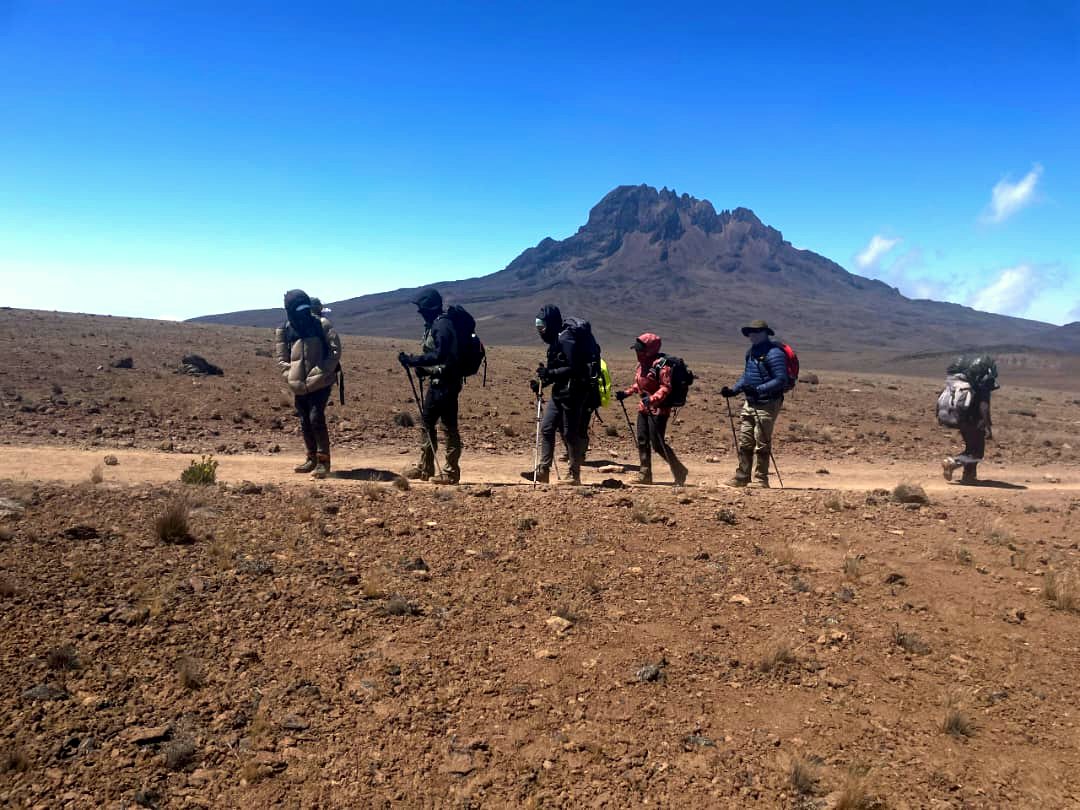
Practical tips for a crowd-free mt Kilimanjaro climb
With these reasons to climb when the crowds are fewer, you want to know how to get that crowd-free experience. Though you may not have a completely exclusive climb, you will enjoy some privacy if you:
Go for the less popular route.
Routes are the first practical option you should consider for a crowd-free climb on Mount Kilimanjaro.
Quick takeaway
- Most crowded: Marangu, Machame
- Moderately crowded: Lemosho
- Less crowded (western side): Shira
- Best for exclusivity: Northern Circuit, Rongai
Most crowded routes
The Marangu and Machame routes are the most popular on Kilimanjaro and will, in most instances, get crowded.
Marangu is particularly bad because it is both an ascent and descent route, and there are overlapping groups, especially at Horombo Hut. The hut accommodation on the route also offers shared rooms, which are not ideal if you would like your own space. Lemosho is also a moderately crowded option that can get annoying human traffic on full moon days and peak season
Less crowded western approach
The Shira route is the least crowded amongst the routes approaching the summit from the western side. However, the route’s unpopularity is largely due to its poor acclimatization profile. The route also merges with other routes in the western part of the mountain, on the Shira Plateau, so you will start seeing large crowds in the moorland region.
Best routes for an exclusive climb
The ideal routes for an exclusive climb, however, are the Northern Circuit and the Rongai route.
The Northern Circuit is usually less preferred because it is more expensive and takes a longer period to summit. This, however, still means it offers the best summit success rate, making it ideal for climbers who want to maximize their chances of summiting.
The route only comes close to the Rongai and Marangu trails at School Hut, its summit camp. This is the first part where you would feel the challenge of crowding, in the last 1–2 days of your climb.
The Rongai route is usually isolated on the northern side of the mountain and is the most remote, typically following the dry region. The route also has impressive summit success rates and usually takes 6–7 days.
On this route, you will maintain an exclusive climbing experience until you reach the summit camps, either Kibo or Barafu Camp.
Crowding on descent
Though crowding isn’t something you can avoid after the summiting camp, it is recommended to descend via the Mweka route.
There are two primary descending routes: Mweka or Marangu. Mweka is usually better as it is only a descending route. Marangu can be crowded as it is both an ascent and descent route, which may lead to congestion.
Consider the shoulder seasons.
Timing your climb is another effective way to avoid crowds on Mount Kilimanjaro.
Quick takeaway
- Most crowded: June–October (long dry season)
- Moderately crowded: mid-December–early March (short dry season)
- Least crowded: late March–May (long rains), November (short rains)
- Best compromise (favorable weather + fewer crowds): March, June, early December
Understanding Kilimanjaro seasons
There are four distinct seasons on Kilimanjaro:
- Long rains: late March to May
- Short rains: November
- Short dry season: mid-December to early March
- Long dry season: June to October
Most crowded period
The long dry season (June–October) sees the highest number of climbers, especially from Europe, during the summer holidays. This leads to crowded trails and camps, particularly on the popular Marangu and Machame routes.
Moderately crowded period
The short dry season (mid-December–early March) is less crowded than the long dry season, but some trails can still see noticeable traffic. Choosing lesser-used routes during this period can provide a relatively quiet experience.
The least crowded period
The rainy seasons (late March–May and November) are typically the quietest times on the mountain, as many climbers avoid the unpredictable weather.
Shoulder seasons: The ideal balance
For the best combination of favorable trekking conditions and fewer crowds, discerning climbers often choose the shoulder periods, immediately before or after the rains, especially March, June, and early December. Over this period, the trails are less crowded than peak dry season months, and the weather is generally good for trekking, allowing for safer and more comfortable climbs
Avoid summiting on a full moon
The lunar cycle is another factor that can influence crowding on Kilimanjaro.
Quick takeaway
- Most crowded: Full moon summit nights
- Less crowded: New moon
- Balanced option: 1–2 days before or after full moon
Why does the full moon attract crowds?
Most climbers aim for a full moon summit to enjoy natural moonlight during the final push, which usually starts at midnight. The full moon offers stunning views of glaciers and the crater in soft light, but trails and summit camps are busier due to the night’s popularity.
New moon option
If you want to avoid crowds, consider summiting during a new moon. Nights are darker, making headlamps essential, but the sky is often stunning with stars. You will encounter significantly fewer climbers on the trails and at summit camps.
Near-full moon alternative
If you prefer some moonlight but want to avoid the peak crowds, consider summiting 1–2 days before or after the full moon. The lunar cycle is continuous, so there is still enough moonlight to illuminate the summit at night, while fewer climbers are on the route.
Avoid group climbing if you can
The size of your climbing party is another key factor that can affect crowding and your overall experience on Mount Kilimanjaro.
Quick takeaway
- Most private: Private climbing packages (exclusive crew and services)
- Shared experience: Group climbing packages (4–12 persons per group)
- Best for exclusivity: Private climbs with family, friends, or partner.
- Recommended group size if shared: Maximum 8 persons for optimal comfort and service
Private climbing packages
Private packages reserve the crew exclusively for you and your climbing partners, family, or friends. You control the pace, itinerary, and timing of the climb. Guides and staff give full attention to your group, ensuring personalized service. This option offers the highest level of privacy and exclusivity, making it ideal for climbers seeking a tailored and intimate experience.
Group climbing packages
This is the best option you have if you are a solo traveler and want company and to share costs with other trekkers. Group packages involve sharing guides, porters, and services with other climbers. Groups typically range from 4 to 12 people. Larger groups reduce the cost per person but compromise privacy and flexibility. More climbers in a group means guides and porters have more tasks, which can lead to slower workflow or delays.
For the best balance of comfort, service, and cost, shared groups should ideally be no more than 8 climbers. Private climbs remain the best option for exclusivity, flexible pacing, and full control of the experience.
Conclusion
Avoiding crowds on Mount Kilimanjaro is not about eliminating people entirely, but about making the right choices in your route, timing, summit date, and group size. While some sections, like the summit push, will always have other climbers, careful planning ensures that most of your journey remains quiet, immersive, and enjoyable. By combining less popular routes, smart seasonal timing, avoiding peak lunar dates, and opting for smaller or private groups, you can significantly enhance both the comfort and overall quality of your Kilimanjaro experience.
Ready to climb Kilimanjaro? Explore our 7 day Machame Route climb, 7 day Marangu Route climb and 10 day Lemosho Route climb, or contact us and we will help you choose the right route and dates.