

Kilimanjaro is one of the most sought-after climbing mountains in the world. At 5,895 m a.s.l., the mountain in northern Tanzania is Africa’s highest peak and one of the world’s highest freestanding mountains. One question that most first-time climbers ask is: How many days exactly do I need to climb Kilimanjaro safely and successfully?
Why duration matters
Kilimanjaro is not a technical climb, but it is a high-altitude trek. The challenge comes from thin air, low oxygen levels, and the risk of acute mountain sickness (AMS). Symptoms of AMS include:
- Headaches
- Nausea or vomiting
- Dizziness and fatigue
- Difficulty sleeping
- Severe cases can lead to life-threatening complications
The body needs time to adjust to altitude. Rushing the ascent increases the risk of AMS, the main reason climbers fail to reach the summit.
The right number of days gives your body the time it needs to acclimatise, increasing your chances of safely reaching Uhuru Peak.
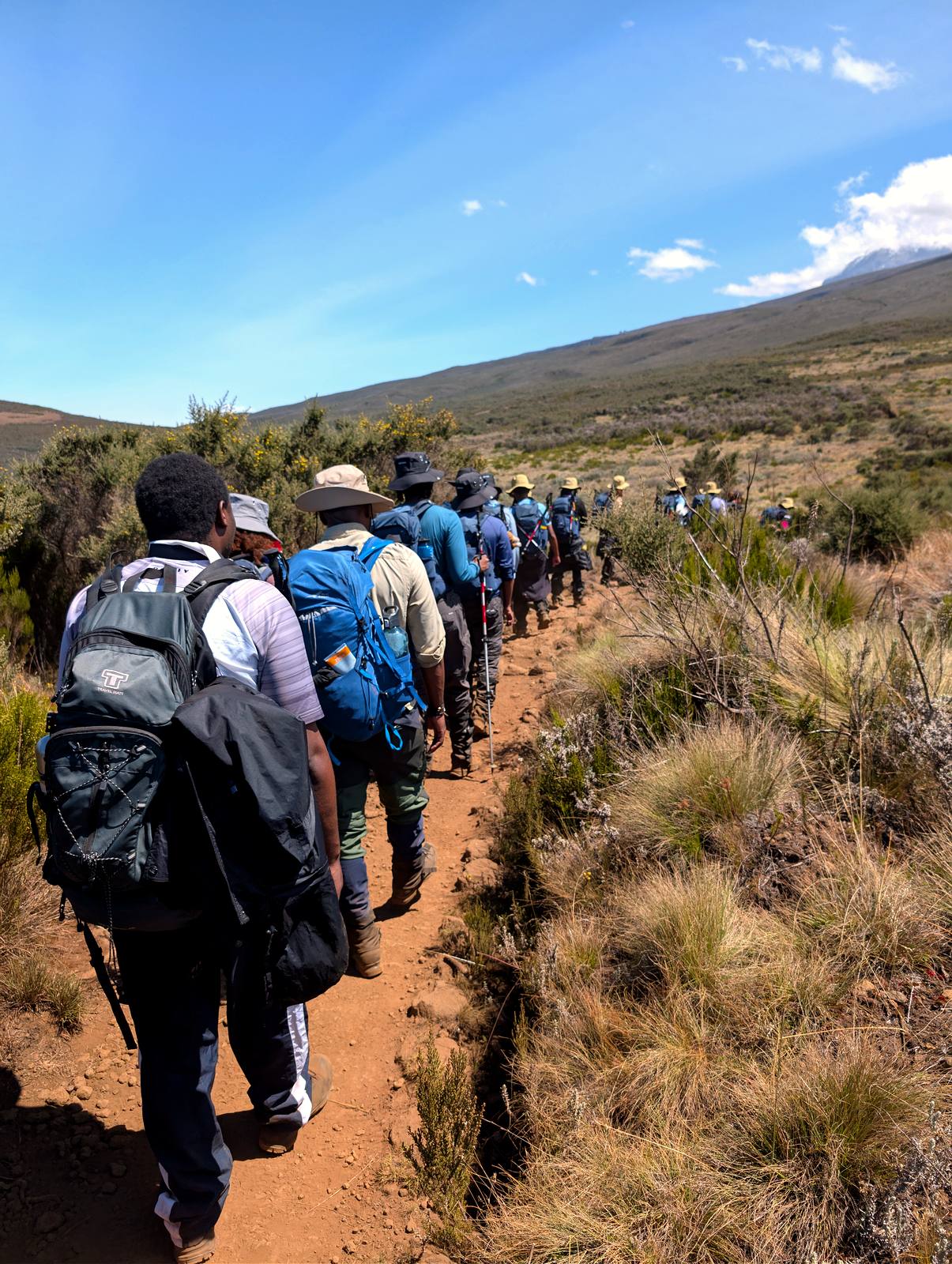
Climbing Kilimanjaro in 6 days
We recommend 6 days as the minimum time to ascend Kilimanjaro. Some of the routes you can summit in 6 days include Shira, Umbwe, and Marangu. With 6 days, you will have a faster-paced climb, with less time for acclimatisation.
Pros:
- Lower overall cost compared to longer routes
- Fit and acclimatised trekkers may succeed
Cons:
- Rapid ascent increases the risk of altitude sickness
- Lower summit success rates than longer itineraries
- Limited time to adjust physically
6 days is usually ideal if you have been practising in a high-altitude environment before you start the climb, or if you have had an acclimatisation trip beforehand. A popular acclimatisation trip is climbing Mt Meru before tackling Kilimanjaro.
Climbing Kilimanjaro in 7 days
A 7-day itinerary is widely considered the best balance between cost, safety, and summit success. Most climbers taking this schedule experience a gradual ascent. Usually, travellers taking the 7-day option have one day to “climb high sleep low,” i.e., spend the day traversing around 3900–4200 m a.s.l., usually gaining altitude throughout the day, and then descend to another camp at a lower altitude. This allows the body to acclimatise and increases the chances of successfully summiting. Some of the routes you can climb in 7 days include the Machame Route, Lemosho Route, Rongai Route, Umbwe Route, and Marangu Route.
Pros:
- Gradual ascent reduces the risk of altitude sickness
- 1 day to “climb high, sleep low” acclimatisation strategy
- Relatively good summit success rate compared to 6-day itineraries
- More affordable trek than more extended packages
- More enjoyable trekking pace
Cons:
- There is still some risk for acclimatisation challenges, primarily if you are used to a sea-level environment
- Not ideal for climbers who want a slow-paced climb or those with cardiovascular-related conditions.
7 days is usually ideal for climbers trying to balance the cost with summiting success rates. It is best for experienced climbers and younger hikers. To increase the chances of summiting, we recommend taking a less direct route with a trailhead at a lower altitude.
Climbing Kilimanjaro in 8 Days
For climbers who prioritise maximum summit success and safety, an 8-day climb is ideal. With 8 days, you will have 2 days to acclimatise using the ‘climb high sleep low’ tactic, which offers better summit success than shorter routes. The best routes for an 8-day climb are the Lemosho Route and the Northern Circuit, which circles around the quieter northern slopes of the mountain. Both are ideal for a slow-paced climb. The Machame and Rongai routes can also be extended to 8 days with an extra day of acclimatisation.
Pros:
- Extra acclimatisation time
- Reduced risk of AMS and related complications
- More comfortable and less fatigue during the summit night
- Better chance to experience the alpine landscape
- Higher likelihood of reaching Uhuru Peak
Cons:
- More expensive than shorter itineraries
Climbing Kilimanjaro in 9 Days or more
The Northern Circuit Route is Kilimanjaro’s longest route and the most common choice for 9 days or more, though the Lemosho Route can also be done over 9 days. The Northern Circuit is the least travelled, yet the best for acclimatisation.
The Northern Circuit has several advantages:
Pros:
- Longest duration for acclimatisation
- Less crowded trails
- Best opportunity to explore the alpine landscape
- Best chance for summiting
Cons:
- It is time-consuming
- It is costly
9 days or more would offer the best chances for summiting. This will give you 3 days of acclimatisation and therefore boost your adaptability to a high-altitude environment. It is the best duration we recommend for older climbers.
Summit success rates by duration
One thing you need to consider when choosing the perfect number of days to spend climbing Kilimanjaro is checking the average success rates for each duration. The success rate may also vary depending on the operator and the route followed. However, this is a table of the success rates for each of the durations above.
| Duration | Approximate summit success rate | Expert comment |
|---|---|---|
| 5 Days | 40 % – 50% | Not recommended |
| 6 Days | 60% – 70% | Only for climbers who have acclimatised on another mountain |
| 7 days | 80 % – 85 % | Good balance between cost and summit success |
| 8 days | 90 %- 95 % | Recommended |
| 9 days | 95 % + | Best option for summiting, but costly |
Note: Each extra day increases the chance of successfully summiting. We recommend considering the maximum number of days you can afford within your budget.
Other factors that may influence the number of days you need
- Route choice: gradual ascent routes like Lemosho and Northern Circuit allow longer duration and better acclimatisation. Steep or short routes like Umbwe or the 5-day Marangu are more aggressive.
- Fitness level: Fitness improves endurance, but cannot replace proper acclimatisation.
- Altitude experience: previous high-altitude trekking can allow slightly shorter itineraries.
- Age and health: older climbers or those with medical considerations benefit from longer climbs.
How does duration impact the summiting night?
The final ascent to Uhuru Peak is by far the most challenging part of climbing Kilimanjaro. You must brave freezing temperatures, begin the trek around midnight, and tackle the trail’s longest and most physically demanding section. This requires not only good fitness but also mental preparation.
Climbers who schedule longer itineraries benefit from a gradual, slow-paced ascent, which conserves energy for summit night and makes the final push more manageable. To make summiting easier, plan the day before the ascent as a short trek — ideally no longer than 5 hours — allowing ample time to rest, relax, and get an early night’s sleep before the midnight climb.
Conclusion: How many days are enough for climbing Mt. Kilimanjaro?
In conclusion, the number of days you spend on Kilimanjaro is the single most crucial factor for a safe and successful climb. Shorter itineraries of 5–6 days are only suitable for very fit, acclimatised trekkers, but come with a higher risk of altitude sickness and a gruelling summit night. Seven-day climbs strike the best balance for most first-time climbers, offering one day for acclimatisation and a manageable pace for summit night. Eight-day itineraries provide extra acclimatisation, reducing fatigue and making the final ascent easier, while nine days or more offer the slowest, safest climb with the highest chance of reaching Uhuru Peak, ideal for older or cautious hikers. Ultimately, taking more days allows your body to adjust to altitude, conserves energy for the demanding summit push, and lets you fully enjoy the breathtaking landscapes of Africa’s highest mountain.
Ready to climb Kilimanjaro? Explore our 7 day Machame Route climb, 7 day Marangu Route climb and 10 day Lemosho Route climb, or contact us and we will help you choose the right route and dates.