5 Day Mount Kenya Climb: Sirimon Route Up, Chogoria Route Down
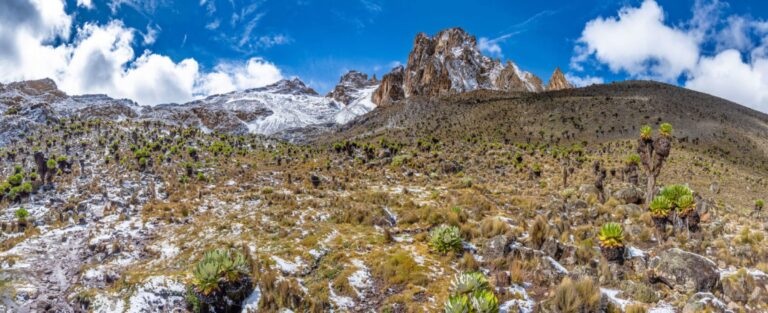
Mount Kenya is Kenya’s highest mountain and the second highest in Africa, a UNESCO World Heritage Site rising from forest and moorland to glaciers and jagged peaks. Its two highest summits, Batian (5,199 m) and Nelion, need technical rock climbing, but Point Lenana (4,985 m) can be reached by fit trekkers with a good guide, and watching the sun rise from the top is one of the great experiences in East Africa.
This five-day trek climbs the gentle Sirimon route through forest and moorland into the Mackinder Valley, then spends a full day acclimatising at Shipton’s Camp beneath the main peaks, which gives you the best chance of reaching the summit. After a sunrise on Point Lenana, you descend the Chogoria route, often described as the most beautiful on the mountain, to finish at Chogoria on the eastern side.
Distance: about 80 km · Difficulty: moderate · Highest point: Point Lenana, 4,985 m · Start and finish: Nairobi (or continue to Samburu from Chogoria)
Accommodation
| Night 1 · Sirimon route | Old Moses Camp (Judmaier Camp), 3,300 m |
|---|---|
| Nights 2–3 · Mackinder Valley | Shipton’s Camp, 4,200 m |
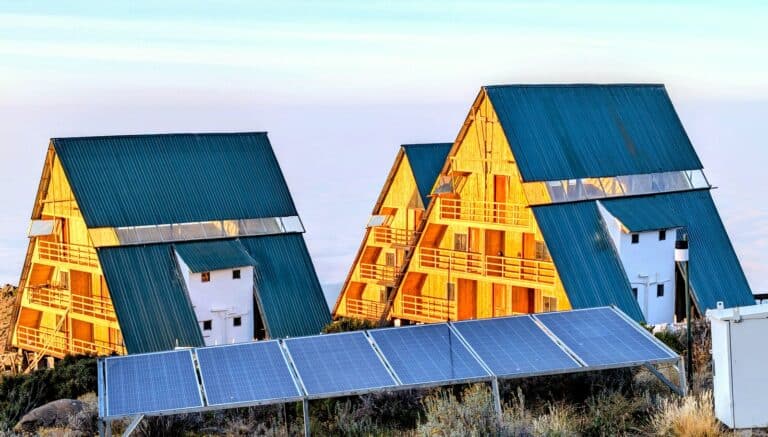
| Night 4 · Chogoria route | Meru Mt Kenya Bandas, 2,950 m |
Itinerary
- 1Nairobi Start
- 2Mount Kenya 3 nights
- 3Chogoria 1 night
- 1Nairobi Finish
By road
Day 1: Nairobi – Nanyuki – Sirimon Gate – Old Moses Camp (LD)
We leave Nairobi at 7:30 AM and drive north for about four hours to Nanyuki, at the north-western foot of Mount Kenya, for lunch. Continue for about an hour to Sirimon Gate (2,440 m), where your guide, porters and cook are waiting. From the gate, walk up the track as it winds through the forest, which gives way to heath and moorland after about three hours. About three and a half hours from the gate, the track turns right to Old Moses Camp, also called Judmaier Camp. Dinner and overnight at Old Moses Camp.
Walking: 3–4 hours · 9 km · Ascent: 860 m · Overnight: Old Moses Camp, 3,300 m
Lunch, Dinner
Day 2: Old Moses Camp – Shipton’s Camp (FB)
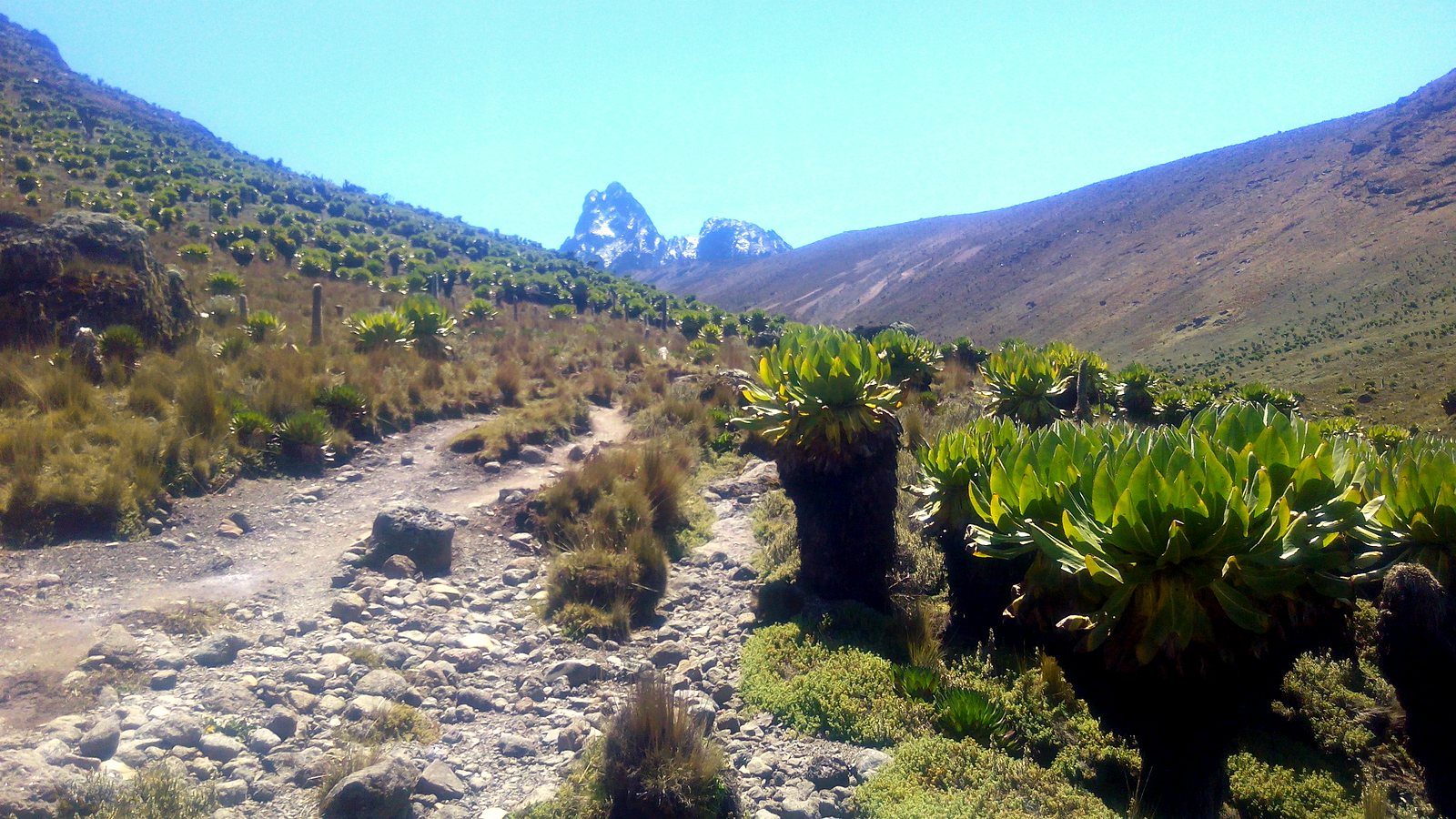
After breakfast, follow the track uphill and fork left at the junction. About an hour from Old Moses, you cross the Ontulili River, then contour to the right through the moorland and cross the Liki North valley. Continue up into the Mackinder Valley, with panoramic views ahead to the main peaks of Batian, Nelion and Point Lenana. Dinner and overnight at Shipton’s Camp, at the head of the valley.
Walking: 6–7 hours · 17 km · Ascent: 900 m · Overnight: Shipton’s Camp, 4,200 m
Breakfast, Lunch, Dinner
Day 3: Shipton’s Camp – Acclimatisation Day (FB)
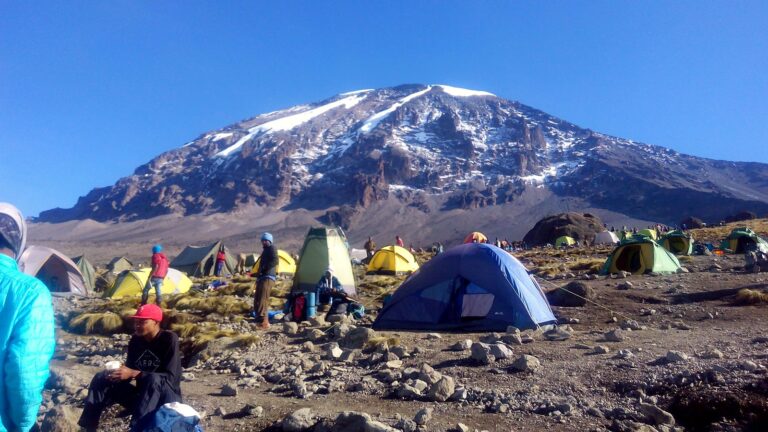
Today is for getting used to the altitude, which makes a real difference on summit day. With your guide, hike up towards Kami Hut and down to the Hausburg and Nanyuki tarns, small glacial lakes beneath the peaks, then walk back to Shipton’s Camp for an early dinner and a good night’s rest before the summit attempt.
Guided acclimatisation hike · Overnight: Shipton’s Camp, 4,200 m
Breakfast, Lunch, Dinner
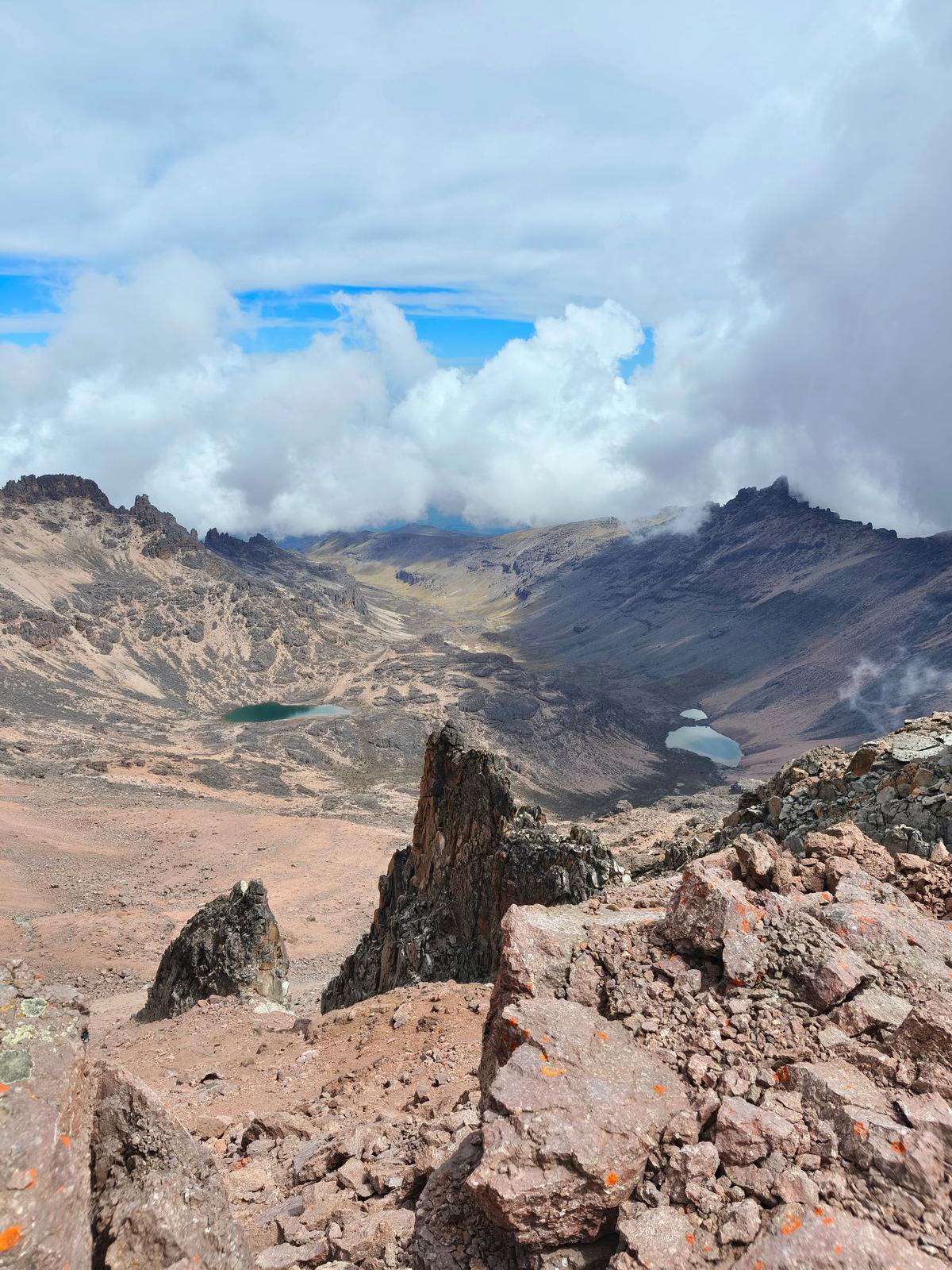
Day 4: Shipton’s Camp – Point Lenana – Meru Mt Kenya Bandas (FB)
Wake in the early hours and set off at about 3:00 AM by headlamp, climbing a steep scree path below the peaks. After about three hours and 6 km, you reach Point Lenana (4,985 m) at around 6:30 AM, in time for the sunrise over the African plains. Take your summit photos, then descend the Chogoria side for about two hours (6 km) to Minto’s Hut for breakfast. Continue down the Chogoria route for another 20 km, about four to five hours, to the Meru Mt Kenya Bandas at the edge of the forest. Dinner and overnight at the bandas.
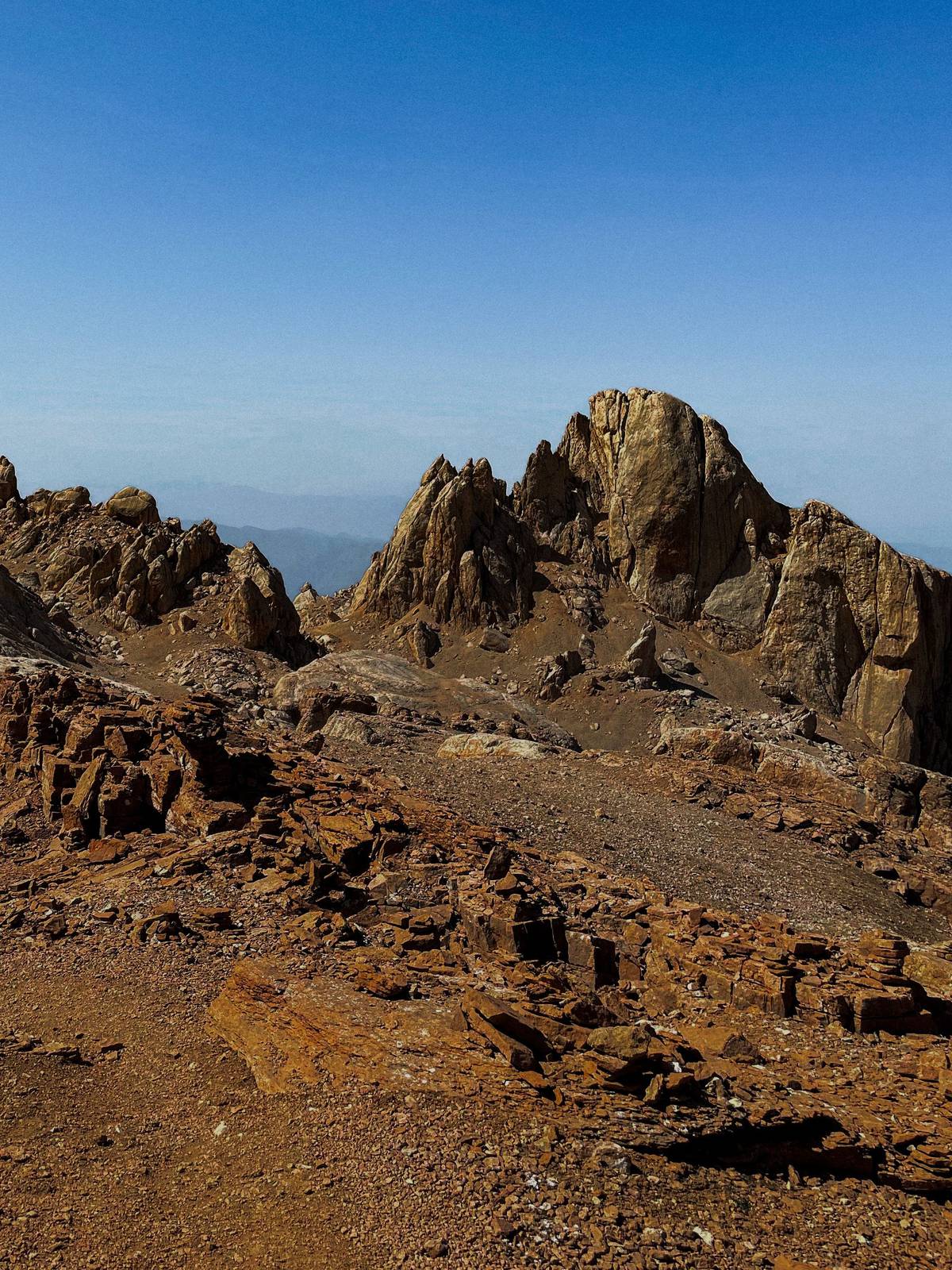
Walking: 11–12 hours · 32 km · Ascent: 785 m to the summit, then a long descent · Overnight: Meru Mt Kenya Bandas, 2,950 m
Breakfast, Lunch, Dinner
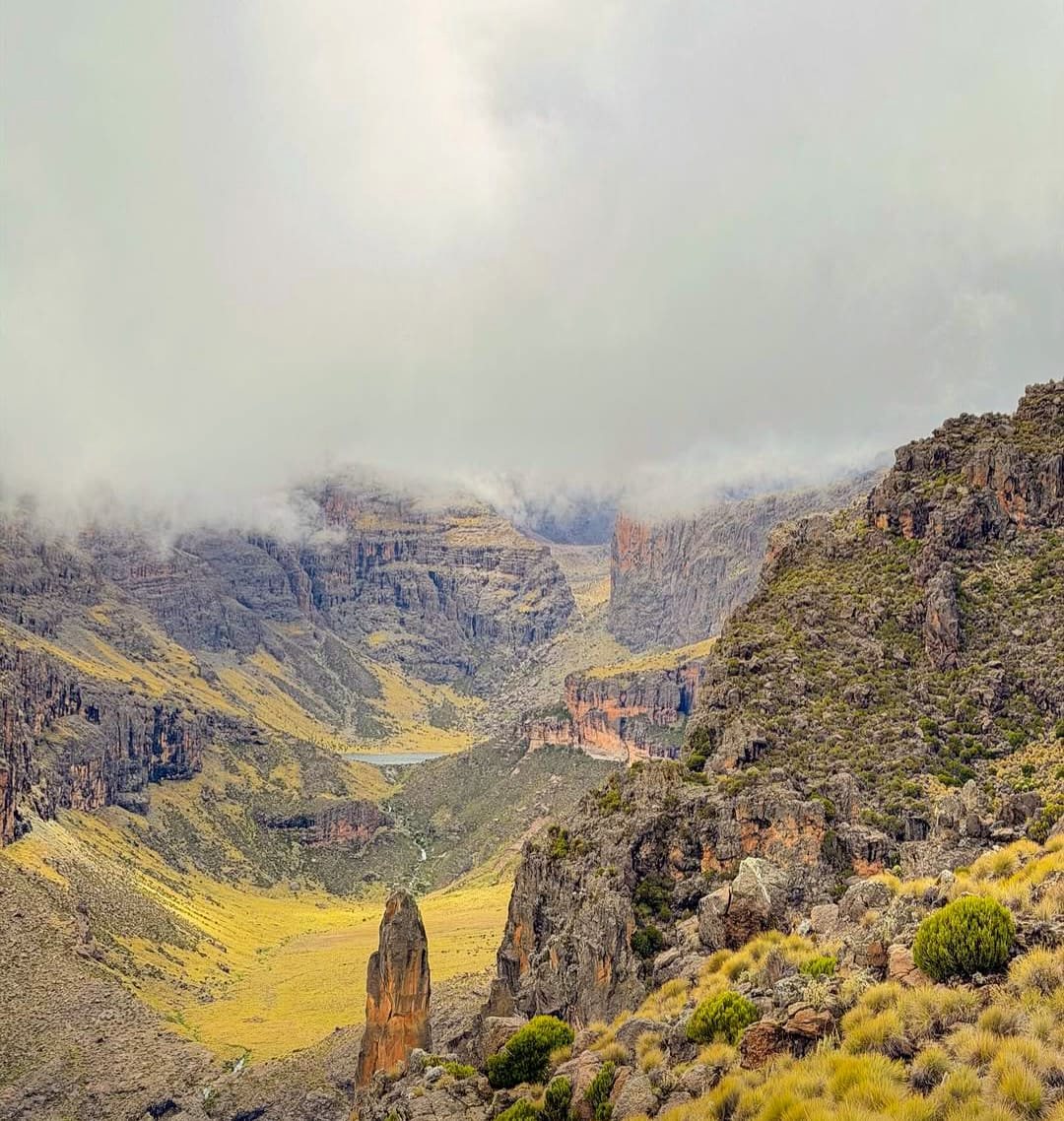
Day 5: Meru Mt Kenya Bandas – Chogoria – Nairobi (BL)
After your last breakfast on the mountain, walk down through the forest for about two hours (15 km) to a clearing, where a 4×4 vehicle takes you the remaining 16 km or so to Chogoria village. From there, your vehicle drives you back to Nairobi, or on to your next destination, such as Samburu National Reserve.
Walking: about 2 hours · 15 km, then about 16 km by 4×4 to Chogoria
Breakfast, Lunch
Package Includes
- Mount Kenya National Park entrance fees and all government taxes
- Transport from Nairobi to Sirimon Gate, and from Chogoria back to Nairobi
- Accommodation in mountain camps and bandas as per the itinerary
- All meals on the trek as per the itinerary
- Services of an English-speaking professional mountain guide, porters and a skilled cook
- Treated drinking water on the trek
- A climb certificate on successful completion
- Guaranteed departure once your climb is confirmed
Package Excludes
- Flying Doctors (AMREF) air ambulance evacuation cover – US$ 10 per person
- Sleeping bags and climbing gear (equipment can be rented from us on request)
- Accommodation in Nairobi before and after the climb
- Tips for your guide, porters and cook
- Laundry, drinks, international flights, visas, travel insurance and personal expenses
What to Pack
Nights on the upper mountain drop below freezing, so warm layers are essential. Your main bag is carried by porters and should weigh no more than 10 kg.
- A sleeping bag rated to −10°C (a fleece liner can make a normal bag warmer)
- A daypack with padded shoulder straps and a waist belt for the things you need during the day
- A warm hat that covers your ears, and a sun hat
- Layers: non-cotton T-shirts, long thermal underwear, a fleece or soft-shell jacket, and a heavy down or synthetic jacket for the summit
- A waterproof jacket and trousers
- Fleece gloves and warm outer gloves
- Hiking trousers and shorts, thin socks and warm wool socks
- Broken-in hiking boots (half a size larger to fit two pairs of socks) and light shoes for camp
- Sunglasses, sunscreen and lip balm (SPF 15 or higher)
- A headlamp with spare batteries for the summit climb
- A telescopic walking pole
- Two water bottles or a hydration pack, plus water purification tablets
- A personal first-aid kit, towel, wet wipes and toilet paper
- Snacks such as chocolate and dried fruit
- Waterproof bags to keep your phone, camera and clothes dry
Most gear can be bought in Nairobi at Decathlon and Carrefour, and we can rent you some of the equipment if you prefer.
Climbing Gear for Hire
No need to buy or carry everything from home: you can hire the main cold-weather gear from us for your climb.
| Item | Hire price |
|---|---|
| Hiking boots | US$ 5 per day |
| Sleeping bag | US$ 2 per night |
| Rain trousers and jacket | US$ 2 per piece per day |
| Gloves | US$ 2 per day |
| Warm freezer jacket | US$ 2 per day |
| Warm balaclava | US$ 2 per day |
| Walking poles | US$ 2 per pair per day |
Please let us know your boot size when you book, so we can have the right pair ready. No deposit is needed, and you collect your hired gear in Nanyuki or Chogoria before the climb starts.
Mount Kenya Climb FAQ
How difficult is the climb?
The trek to Point Lenana is graded moderate. You need good fitness and should be comfortable walking for six to seven hours on consecutive days, but no technical climbing skills are needed. Summit day is long, with about 11 to 12 hours of walking, so regular hiking before your trip helps a lot.
What about altitude sickness?
Most climbers feel the altitude above 3,500 m, with headaches or shortness of breath. This itinerary includes a full acclimatisation day at Shipton’s Camp, which reduces the risk and improves your chances on summit day. Walk slowly, drink plenty of water, and tell your guide how you feel; guides are trained to recognise the symptoms and will take you down if needed.
When is the best time to climb Mount Kenya?
The driest and clearest months are January to March and July to October. The long rains in April and May and the short rains in November make the trails wet and the views less reliable.
Can I go on safari after the climb?
Yes. From Chogoria, on the eastern side of the mountain, you can drive straight on to Samburu National Reserve or Meru National Park for a safari instead of returning to Nairobi. Ask us to plan it for you.