

Mount Kilimanjaro is one of the highest non-technical mountains in the world, meaning almost anyone with good preparation can summit. You won’t need ropes or carry artificial oxygen to completely summit the mountain. This is enough information to say the mountain is generally not so demanding. While this can also mean it is not a difficult mountain to climb on the surface, you would be surprised to learn that a mountain like most other summits that rise to over 5000 m asl can be challenging.
Every year, thousands of trekkers attempt to reach Uhuru Peak, yet a significant number turn back before the summit. There has also been a small portion of recorded fatalities every year, which means the mountain climbing experience could still take life. The reason for the challenging moments is not steep cliffs or dangerous terrain, nor accidents that cause deaths. It is a combination of factors that gradually build pressure on your body over several days.
To help you truly understand how difficult Kilimanjaro is, we take a look at some of the challenging elements and how to deal with them.
Altitude: The single biggest challenge on Kilimanjaro
If there is one factor that defines the difficulty of Kilimanjaro, it is altitude. As you ascend the mountain, the air becomes thinner, meaning there is less oxygen available with every step you take.
By the time you reach the summit, the oxygen level is roughly half of what it is at sea level. This affects how your body functions. Simple tasks like walking, eating, or even talking can feel unusually exhausting. Your body has to work harder to perform basic activities, and this is where many climbers begin to struggle.
Altitude sickness can develop regardless of age or fitness level. Even experienced athletes and experienced mountaineers are not immune. Symptoms can range from mild headaches and fatigue to more serious conditions that require immediate descent. In fact, a significant percentage of those who attempt the climb still do not reach the summit due to altitude complications. However, even though there is no one who is completely free from the risk of severe altitude sickness, you can lower the risk by considering longer routes that allow more acclimatization, a slow-paced climb, and proper hydration throughout the climb.
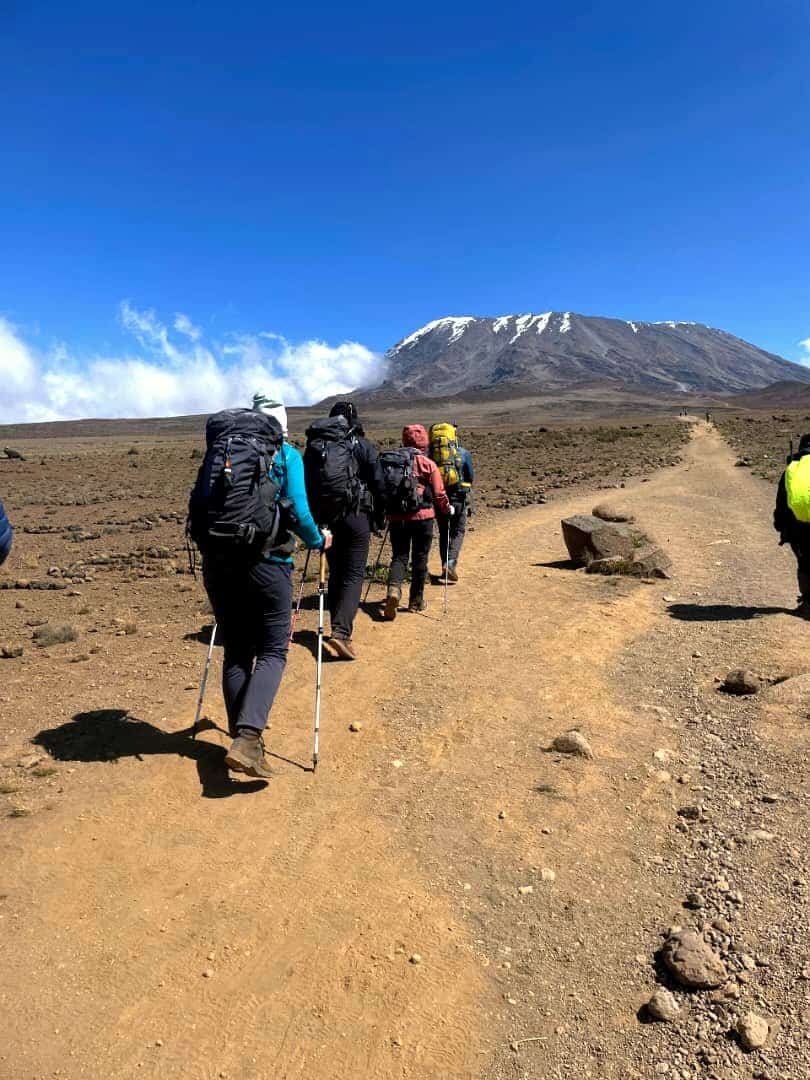
The cumulative fatigue of multi-day trekking
At over 5000 m, Kilimanjaro is definitely a tough climb that takes most climbers six to eight days. Each day involves hours of trekking, often at a slow but steady pace.
At first, the hikes may feel manageable. The early days pass through forest and moorland, where the terrain is relatively gentle, and your body hasn’t yet started straining. However, as the days go on, fatigue begins to accumulate. Muscles become sore, energy levels fluctuate, and recovery time becomes shorter.
What makes this particularly challenging is that there is no real “reset.” You wake up each day slightly more tired than the previous one. By the time you approach the summit, your body is already under stress, making the final push significantly harder. You may be surprised to know that descending is even tougher, and on most Kilimanjaro routes you descend to a much lower camp on the same day you summit, the longest walk you will have in the entire climb.
To minimize the challenge, we recommend you choose a package with short walks between camps. Ensure there are breaks during treks that are half-day, like the trek from morning to arriving at the next camp in the afternoon. This will give you more time to reset. Also, carry trekking poles; they are very helpful on the descent.
Summit night: where the real test begins
If you ask anyone who has climbed Kilimanjaro, they will tell you that summit night is the hardest part of the entire experience.
The summit attempt usually begins around midnight. You start hiking in complete darkness, guided only by your headlamp and the footsteps of others ahead of you. The temperature is at its lowest, often dropping to -10°C to -20°C, and the air is at its thinnest.
The climb itself is slow and relentless. There are no dramatic rock climbs—just a steady uphill slog on loose volcanic scree. Every step can feel like an effort, and progress is measured in small increments.
At this stage, the challenge becomes as much mental as physical. You are cold, tired, and short of breath, yet you still have several hours of climbing ahead. Many climbers reach their breaking point here, not because they can’t physically continue, but because the conditions push their limits. To have a less demanding summit night, ensure you have had proper acclimatization before summiting. Ensure you have warm, fully layered clothing covering your body, neck, and head. Also, have sunscreen and sunglasses to protect from sunburn.
Temperature extremes and layering
Kilimanjaro exposes you to a wide range of temperatures within a short period. The mountain has five different climatic zones, each offering unique weather conditions. During the day, especially at lower and mid altitudes, the sun can be intense, making it feel surprisingly warm. However, as soon as the sun sets, temperatures drop quickly. Nights become cold, and at higher altitudes, freezing conditions are the norm. In the summit region, the weather is extremely cold due to the thinning atmosphere. Ensure that you are prepared for all weather by having the right clothing that suits all conditions. Ensure your gear, such as your sleeping bag, is suitable for sub-zero temperatures.
Terrain: not technical, but still demanding
One reason Kilimanjaro is considered accessible is that it does not require technical climbing. However, that does not mean the terrain is easy.
You will encounter a variety of surfaces throughout the climb. In the rainforest zone, trails can be muddy and slippery. As you move higher, the terrain becomes rocky and uneven. Near the summit, you will walk on loose scree, where each step forward can feel like sliding back slightly.
Sections like the Barranco Wall add an element of scrambling, where you may need to use your hands for balance. While not dangerous, it requires focus and coordination.
The long trek in the varied landscape can cause fatigue. Ensure you are physically fit before embarking on the climb and avoid overexertion.
Comfort and accommodation on Kilimanjaro
While climbing Mount Kilimanjaro, it is important to understand that the experience involves some compromise in comfort.
On most routes, accommodation is in camping tents set up at designated camps. These are typically shared, and facilities are basic. You will not find luxury amenities at altitude—this is part of what makes the climb a true wilderness experience.
Sanitation facilities are also simple, often consisting of shared toilets. Water is limited, especially at higher elevations, so showers are not available during the trek. Most climbers rely on wet wipes to maintain personal hygiene throughout the journey.
The support team prepares meals, which are usually served in a communal dining tent. While the food is warm and nourishing, the setting is simple and designed to support your energy needs rather than provide a restaurant-style experience.
The only exception is the Marangu Route, where accommodation is in dormitory-style huts instead of tents. Even here, facilities remain basic, with shared sleeping and bathroom areas.
Despite these limitations, many climbers find that the simplicity adds to the experience’s authenticity. With the right expectations, these conditions become part of the adventure rather than a drawback.
Conclusion: Is Kilimanjaro Difficult?
Climbing Mount Kilimanjaro is not technically difficult, but it is far from easy. The challenge lies not in ropes or steep climbs, but in altitude, endurance, and the ability to cope with several days of physical and mental strain.
For many, the difficulty comes as a surprise. The steady gain in elevation, combined with fatigue, cold temperatures, and basic living conditions, gradually pushes your body to its limits. This is why some climbers, despite strong fitness levels, are unable to reach the summit. It is for this reason that we recommend you be fully aware of the experience, be prepared, and seek advice from your guide and operator to conquer the rooftop of Africa.
In the end, Kilimanjaro’s difficulty is what makes reaching the summit so rewarding.
Ready to climb Kilimanjaro? Explore our 7 day Machame Route climb, 7 day Marangu Route climb and 10 day Lemosho Route climb, or contact us and we will help you choose the right route and dates.