

Kilimanjaro is one of the Seven Summits and the highest peak in Africa. The towering mountain in Tanzania’s northern region is therefore one of the must-do climbs on any avid climber’s bucket list. One thing that most first-time climbers consider for a Mt. Kilimanjaro climb is the type of accommodation available. Usually, there are two kinds of accommodations you will find. There is budget tented camp and mountain hut accommodation. In this guide, we delve into each while also looking at the amenities you should expect.
Tented camps
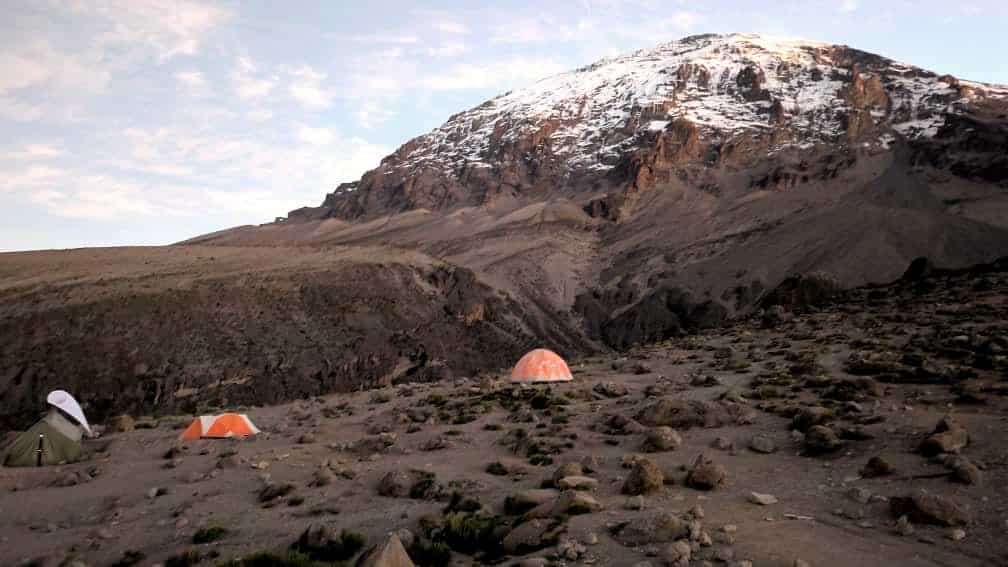
This is the only type of accommodation on all Kilimanjaro routes except the Marangu route. The tents are usually portable canvas tents provided by your tour operator. The porters usually carry the tent with them and also set it up at each campsite.
Popular campsites you could stay at include:
- Machame route: Machame Gate, Machame Camp, Shira Camp, Barranco Camp, Karanga Camp, Barafu Camp, Uhuru Peak, Mweka Camp
- Rongai route: Rongai Gate, Simba Camp, Second Cave Camp, Kikelewa Camp, Mawenzi Tarn Camp, Kibo Hut, Uhuru Peak, Horombo Hut
- Shira route: Shira Gate, Simba Cave Camp, Shira 2 Camp, Lava Tower, Barranco Camp, Karanga Camp, Barafu Camp, Uhuru Peak, Mweka Camp
- Umbwe route: Umbwe Gate, Umbwe Cave Camp, Barranco Camp, Karanga Camp, Barafu Camp, Uhuru Peak, Mweka Camp
- Lemosho route: Londorossi Gate, Mti Mkubwa (Big Tree) Camp, Shira 1 Camp, Shira 2 Camp, Barranco Camp, Karanga Camp, Barafu Camp, Uhuru Peak, Mweka Camp
- Northern circuit: Londorossi Gate, Mti Mkubwa (Big Tree) Camp, Shira 1 Camp, Shira 2 Camp, Moir Hut Camp, Buffalo Camp, Third Cave Camp, School Hut, Uhuru Peak, Mweka Camp
The most widely used tents are the small dome tents, which are designed with a minimalist yet comfortable layout. They come in different sizes for single or double occupancy. There is also the luxury walk-in tent, usually offered with luxury climbing packages. These tents are more spacious but still portable. Overall, a good camping tent should be:
- Durable: The tent should be suitable for all seasons and adapted to the alpine climate to guarantee a comfortable night’s sleep
- Spacious: a tent should accommodate 1 or 2 people and provide space for equipment and personal effects.
- Should have accompanying equipment: Every tent should come with a sleeping mattress for each guest and a storage pocket; sleeping bags can be brought or hired. The equipment must be of high quality and meet industry standards.
- Portability and easy to set up. The tent should be easy to carry from one campsite to another and also easy to disassemble and set up.
- Ground insulation. The tent should have ground insulation in addition to the sleeping bag. This protects you from absorbing cold from the ground.
Accompanying amenities in a tented style on the Mt Kilimanjaro climb
Toilet
Every campsite has communal toilets, and, truly speaking, they are not in very good condition. However, some operators offer private toilet tents as a standard, essential part of a private climbing package. This is important to ensure hygiene standards are maintained throughout the climb. These facilities are usually built with simple, durable canvas and a portable toilet that includes all the necessary toiletries: tissue paper, hand sanitizers, and other hygienic essentials.
Dining
Dining in the campsites is communal, with meals served in a large dining tent alongside your group. This gives you the best chance to socialize while you eat. The dining tent is also a minimalist, portable facility, but it’s fair enough, offering warmth and shelter. It is also important to know that, though they are large enough to take more guests, they lack the headroom, and therefore you will still have to forgo some little comforts.
Shower
Where and how to shower is the most sought-after question on Mt Kilimanjaro climbs. It is good to know that, as in most other similar summits around the world, water is scarce, especially in the high-altitude areas. Due to this limitation and the cold environment, there is no bathing in the traditional sense on Mt Kilimanjaro, especially at high altitude. The best option for bathing is using wet wipes to stay clean throughout the climb. In the lower campsites, you may be offered a little basin of water to clean. Importantly, for luxury climbers, a portable bathroom could be offered for use in the lower camps.
Huts
Huts are the accommodation type you will find on the Marangu route, the pioneer trail on the mountain. These are dormitory-style wooden huts with bunk beds. These facilities make Marangu the ideal route for climbers looking to have a roof over their head while not minding sharing accommodation with other climbers. The huts on this route include Mandara Hut, Horombo Hut and Kibo Hut. Each bunk bed has its own bedding. The huts guarantee maximum protection from harsh conditions like wind and rain, especially if you are hiking during the rainy season.
Accompanying amenities in hut accommodation in Kilimanjaro
Toilet
The Marangu Route offers communal toilets:
- Lower camp (Mandara and Horombo huts)- flush toilet
- Summit camp (Kibo Hut) – long drop toilets
Overall, these facilities are better maintained than campsite toilets on other routes.
Dining
Meals are served in communal dining halls within or near the huts. Unlike tented camps, you benefit from a more stable structure, tables, and seating—making dining more comfortable, especially in bad weather.
Shower
Just like in tented camps, proper showers are not available at higher elevations. At lower huts, you may get limited water for basic washing, but most climbers still rely on wipes.
Final thoughts: Which accommodation is best?
Generally, as with most other mountain-climbing experiences, accommodation is minimal and simple. Whether you go for the hut or the camps, you will have to forego some comfort. However, if you just don’t love camping, you can go for the hut route.
Importantly, in reality, most travelers’ choice of route determines their accommodation type more than their preference.
If comfort is a priority, upgrading your trekking package to luxury camping often gives the best balance between experience and cost.
Ultimately, regardless of where you sleep, the experience of climbing Mount Kilimanjaro remains one of the most rewarding adventures in the world.
Ready to climb Kilimanjaro? Explore our 7 day Machame Route climb, 7 day Marangu Route climb and 10 day Lemosho Route climb, or contact us and we will help you choose the right route and dates.