

Wildebeest are grazing animals that are very common in Kenya and Tanzania, and southern African countries also have good numbers of them. The Masai Mara, the Ngorongoro Conservation Area, the Serengeti and Tarangire are the leading places to see them, and in the right season you are very likely to see big herds. They are best known for their migration in the Mara–Serengeti ecosystem, with a smaller movement in the Tarangire–Lake Manyara ecosystem. The Great Migration is the world’s most famous movement of land animals, with about 1.5 million wildebeest moving alongside about 200,000 zebras and several hundred thousand gazelles. It follows a clockwise loop between the Ndutu plains in the south and the Masai Mara in the north, and the herds take about a year to complete one cycle. The Tarangire migration, on the other hand, happens in the dry season, roughly July to October, when gnus, zebras, antelopes and elephants move to the Tarangire River and its floodplain for water and fresh grazing. In this guide we share some of the most interesting facts about gnus.
Habitat: they feed on grass
Wildebeest are herbivores and prefer short grass, so you will mostly find them on the open savannah plains. When grass is scarce they may also feed on leaves and small plants. Calves begin grazing soon after they are born. The herds graze most actively in the cool morning and late afternoon hours.
Social behaviour: they are sociable
Wildebeest are very sociable and live in herds. Most herds are made up of females and their young, which stay together while grazing. This helps them protect themselves and their calves from predators. During the mating season (the rut) you can see the males fighting for dominance. Because the herds keep moving, members of one herd often end up moving with another when they meet. Wildebeest usually travel in long columns that can stretch for several kilometres.
Physical features: there are blue and black wildebeest
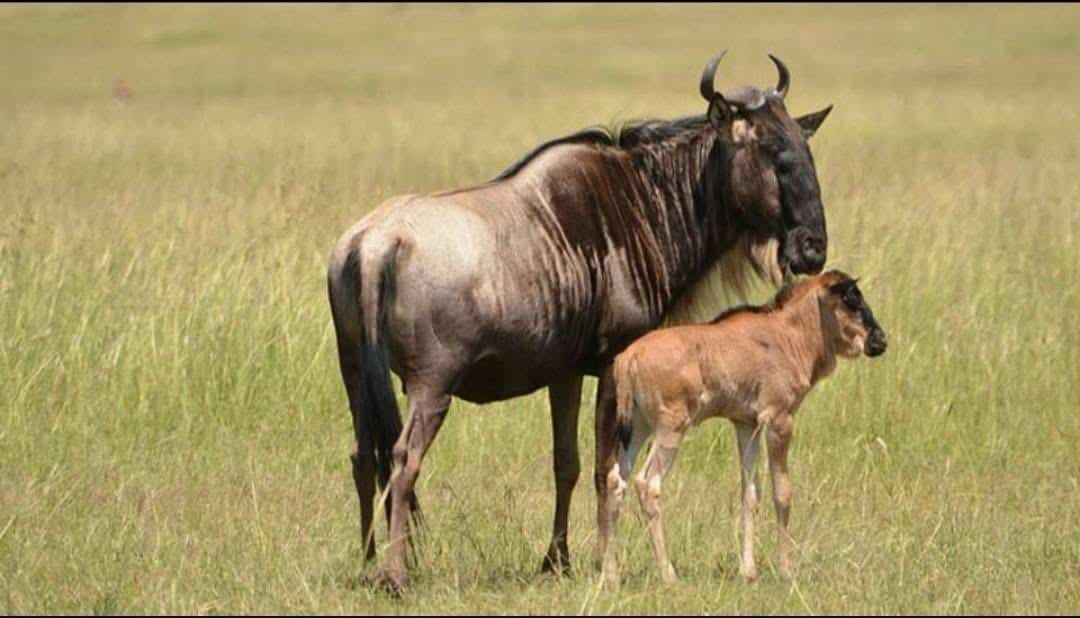
There are two species of wildebeest: the blue (or common) wildebeest and the black wildebeest. The blue wildebeest has a dark grey, slightly bluish coat with dark stripes and a black beard, while the black wildebeest has a dark brown coat and a white tail. The blue wildebeest is larger, and its horns grow out sideways, curve down and then turn up. The black wildebeest’s horns point forward, curve down and then curve up. Blue wildebeest have a wide mouth suited to cropping short grass. All wildebeest have a shaggy mane on the neck. It is the blue wildebeest that migrates; the black wildebeest tends to stay in the same range. Black wildebeest are found only in southern Africa, while the blue wildebeest is the one you will see in East Africa.
Migration: they move in search of grass and water
The wildebeest migration is one of the most remarkable animal movements on earth. The herds move mainly in search of fresh grazing and surface water, and they need to drink almost every day. Contrary to popular belief, they do not follow one fixed route; their movement is driven by where the rain falls and the grass grows. They are especially drawn to grass that is rich in phosphorus, which is important for pregnant and nursing females. The herds move in long columns and can cover long distances in a day. When chased by a predator, a wildebeest can run at up to about 80 km per hour.
Partners: zebras are their migration allies
Wildebeest migrate alongside zebras. The two do not compete much for food: zebras eat the taller, coarser grass, which exposes the shorter, fresher grass that wildebeest prefer. Zebras are also said to remember safer routes, while wildebeest are quick to sense danger. This relationship keeps the two animals together. About 200,000 zebras take part in the Great Migration.
Lifespan: they can live for up to 20 years
Wildebeest live one of the riskiest lives in the African bush. Their dark colour gives them little camouflage on the open plains, and the migration takes them past many predators, including lions, hyenas, cheetahs and crocodiles. The Mara River crossings alone are estimated to cost about 6,000 wildebeest lives a year. Danger starts at birth, as lions, spotted hyenas and wild dogs follow the herds and target newborn calves. Wildebeest, however, have sharp senses and face danger as a group. This defence helps some wildebeest live for up to 20 years in the wild, longer than most wild lions.
Gestation: they give birth after about 8.5 months
Wildebeest are pregnant for about 8.5 months, close to the length of a human or cattle pregnancy. In the Mara–Serengeti ecosystem, the calving season runs from January to March, mostly on the short-grass plains of the southern Serengeti around Ndutu. About 500,000 calves are born each season, with up to 8,000 births a day at the peak. A calf can stand and walk within minutes of birth, although it is still wobbly. To protect the young from hyenas and lions, females gather the mothers and calves towards the centre of the herd. When there is danger, wildebeest make a nasal “gnu” call that alerts the rest of the herd.
Dangerous river: the crossing is never predictable and goes back and forth
The Mara River is the biggest obstacle the herds face during the migration. No one can say exactly when a crossing will happen. The herds cross depending on the grazing on the other side, and even then they often gather on the bank for hours before one brave wildebeest leads the way. Again, contrary to popular belief, the river crossing is not a one-off event. The herds keep crossing back and forth as they follow the grazing. In the Masai Mara, river crossings happen from July to October, and are usually best in August and September.
Deaths: about 250,000 wildebeest die in one migration cycle
It is estimated that about 250,000 wildebeest die during one full migration cycle, and about 6,000 of them in the Mara River crossings alone. Many are killed by predators: the Serengeti–Mara ecosystem has around 3,000 lions in many prides, as well as hyenas, cheetahs, leopards and wild dogs. Crocodiles in the Grumeti and Mara rivers also take their share. Others die in accidents, especially when they jump into the river from the steep banks of the Mara, or from exhaustion and disease.
Sleep: they are neither diurnal nor nocturnal
Wildebeest feed both during the day and at night. On average a wildebeest sleeps about 4 hours a day, and there is no set time when the whole herd sleeps. Some animals keep grazing while others rest. The resting ones sleep lightly and get up at once when the others signal danger. The herds move both by day and by night.
Communication: they use sound, smell and marking
What allows gnus to stay in organised groups through the migration is how well they communicate. The herd uses a snorting alarm call to signal that a predator is around, and their calls can carry for more than a kilometre. Dominant males, on the other hand, mark their territories and use scent to communicate with other males. To warn off rival bulls, a dominant male may also dung, bellow or toss his horns.
Ready to see the migration? Join our 5 Day Wildebeest Migration Safari in the Masai Mara for the river crossings from July to October, or combine Kenya and Tanzania on our 6 Day Masai Mara, Serengeti and Ngorongoro Safari. For your camera, read our tips on great migration photography. Contact us and we will plan the right migration safari for your dates and budget.