

Climbing Mount Kilimanjaro, Africa’s highest peak at 5,895 meters, is an unforgettable adventure. While most trekkers consider seasons, discerning climbers also want to align with the full moon. The full moon happens after every 29.53 days, roughly once a month. This means there are only 12 or 13 full moon nights a year for your summit.
Why full moon summiting is ideal
- Natural illumination. Usually, summiting Kilimanjaro takes place after midnight. Summiting at the full moon will provide natural illumination during the ascent, reducing your reliance on a headlamp.
- Stunning photography: Another reason some climbers prefer summiting at full moon is the opportunity it offers for photographers and general viewing of the shimmering glacier landscape. With a full moon, you will enjoy spectacular views even before sunrise.
- Psychological boost. The glowing moon offers a sense of orientation and companionship during the long night ascent. Actually, the full moon ascent is usually the most crowded moment for ascent, and you will enjoy the company of other climbers even better.
- Extra motivation. The summit night is usually the toughest day of the Mt. Kilimanjaro climb, and it helps to trek with a daytime-like light rather than in full darkness.
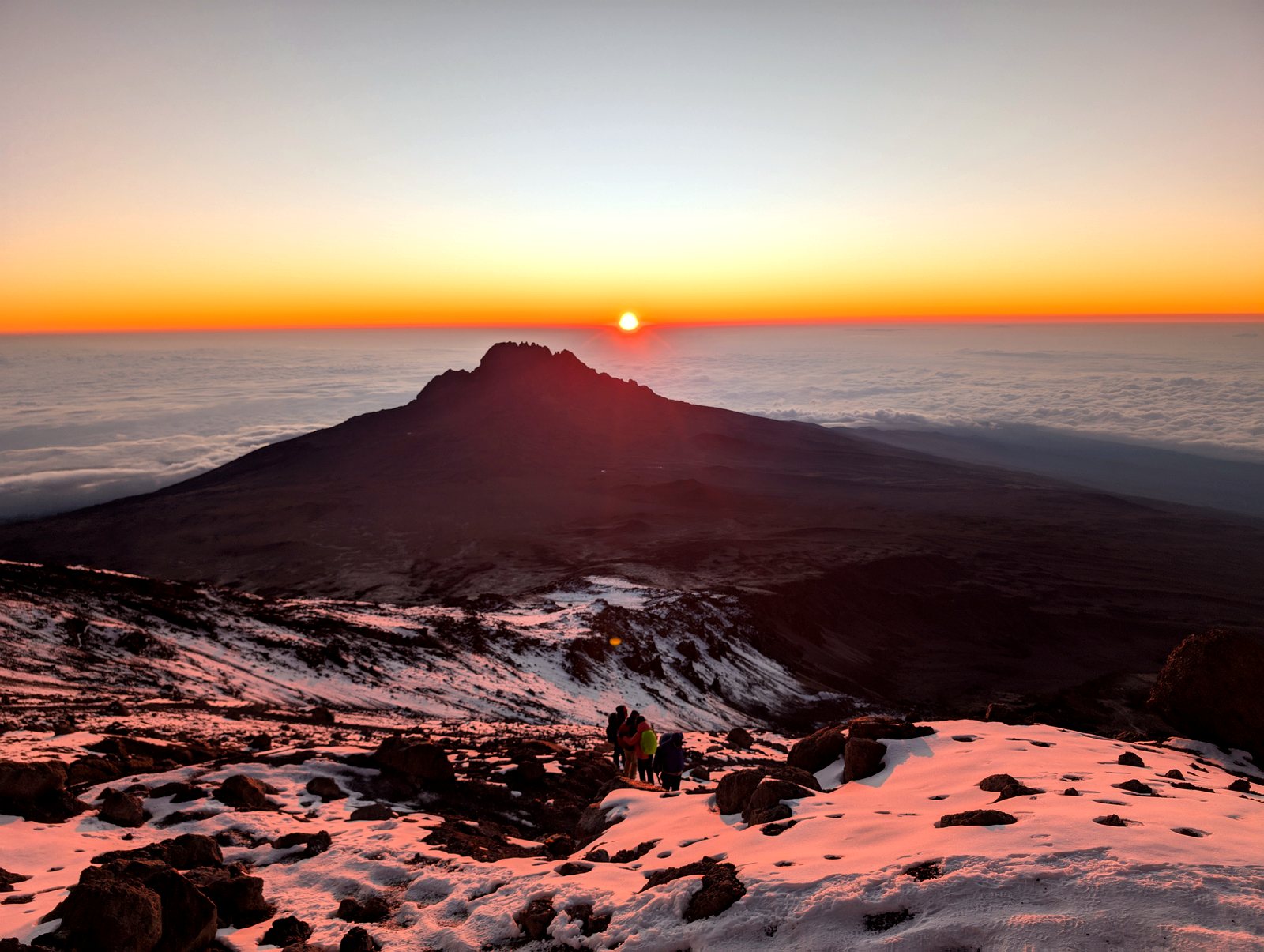
How to plan your full moon climb
When scheduling your climb, it is important to consider:
- Aligning your trekking days. To ensure you summit exactly at full moon, it is best to align your itinerary to the exact full moon day. For instance, if you are on a 7-day climbing tour, you should start your climb about 5 days before the full moon. This will enable you to summit to Uhuru Peak on the sixth day, when it is full moon.
- Plan early. There are only 12 or 13 full moon days a year, which means there are limited slots for both private and group climbing tours. To guarantee this lifetime opportunity, consider booking at least 3 months in advance.
- Consider trekking over the dry season. Full moons during the rainy seasons can be unreliable due to clouds that can cover the moonlight. Avoid climbing in April, May, and November.
- Choose less popular trekking routes. The full moon days are the most crowded in Mt Kilimanjaro. Avoid the popular route, especially Marangu, where you will be sharing a room with many climbers, especially at Horombo hut, which is both an ascent and descent stop. Consider the Rongai and Northern Circuit routes for a more off-the-beaten-path experience.
- Don’t leave your headlamp. The weather in Kilimanjaro is unpredictable; you may have traveled at the right season but end up with a gloomy day summiting. It is good to have a headlamp for summiting, just in case.
- Don’t leave your camera and binoculars too. This will help you maximize the views and create memories.
Full Moon Calendar for 2026
Dates are in East Africa Time. Plan your summit night for the night leading into the date shown.
| Months | Full moon summit date |
|---|---|
| January | January 3 |
| February | February 2 |
| March | March 3 |
| April | April 2 |
| May | May 1 & May 31 (blue moon) |
| June | June 30 |
| July | July 29 |
| August | August 28 |
| September | September 26 |
| October | October 26 |
| November | November 24 |
| December | December 24 |
Full Moon Calendar for 2027
| Months | Full moon summit date |
|---|---|
| January | January 22 |
| February | February 21 |
| March | March 22 |
| April | April 21 |
| May | May 20 |
| June | June 19 |
| July | July 18 |
| August | August 17 |
| September | September 16 |
| October | October 15 |
| November | November 14 |
| December | December 13 |
Waxing vs waning full moons
The full moon is the night when the moon appears fully illuminated from Earth, but it is part of a continuous lunar cycle. While you may not be able to climb at the exact full moon, you may as well consider climbing a day earlier, when the moon is building up to full moon (waxing moon) or a day after full moon, during the period after the full moon, when the moon’s illumination decreases. These nights still have good moonlight. The softer moonlight in these periods can be stunning for photography and landscape viewing.
New moon scenario
Importantly, some climbers still avoid the full moon and opt to summit around the new moon, about two weeks after the full moon. The new moon season offers the darkest moment, and stars are more visible. This makes it the best for climbers who would love to summit under the starry night sky. The new moon seasons are also less crowded than the full moon.
Ready to climb Kilimanjaro? Explore our 7 day Machame Route climb, 7 day Marangu Route climb and 10 day Lemosho Route climb, or contact us and we will help you choose the right route and dates.