

The Marangu Route, often called the “Coca-Cola Route,” is the oldest and most established route to the summit of Mount Kilimanjaro. Approaching the mountain from the southeastern side, the route starts at Marangu Gate and ascends steadily through dense rainforest, heath, and alpine desert zones before reaching Uhuru Peak. Unlike other routes, Marangu is the only trail that offers hut accommodation, making it a popular choice for climbers seeking shelter from rain and cold rather than tented camping.
Despite its reputation as the “easiest” route, Marangu’s success largely depends on the length of the itinerary. The route follows the same path for ascent and descent and has a relatively direct profile, which can limit acclimatisation if climbed too quickly. When rushed, this direct ascent results in lower summit success rates than longer routes such as Lemosho or Machame. However, when extended and well-paced, Marangu can still offer a great chance of summiting and a comfortable climb.
Trekking experience
Climbing Kilimanjaro via the Marangu Route offers a structured and steady journey through the mountain’s ecological zones. The trek begins in dense rainforest, where towering trees and birdlife create a vibrant introduction to the climb. As you gain altitude, the landscape opens into heath and moorland with expansive views of Kibo and Mawenzi, before transitioning into the stark alpine desert surrounding Kibo Hut. The gradual trail gradients make the route physically manageable, though the steady elevation gain requires discipline in pacing.
Summit night is long and demanding, with a slow zigzag climb to Gilman Point and onward along the crater rim to Uhuru Peak.
Summit success rate
The Marangu Route’s summit success is highly influenced by the number of days spent on the mountain. Short itineraries are the main reason for its lower overall success reputation.
- 5 days: 50–60% success
- 6 days: 65–75% success
- 7 days: 75–85% success
Many climbers attempt Marangu in 5 days, which significantly increases the risk of altitude sickness. We strongly recommend a 6 or 7-day itinerary, which allows for better acclimatisation and noticeably improves summit success.
Merits of the Marangu Route
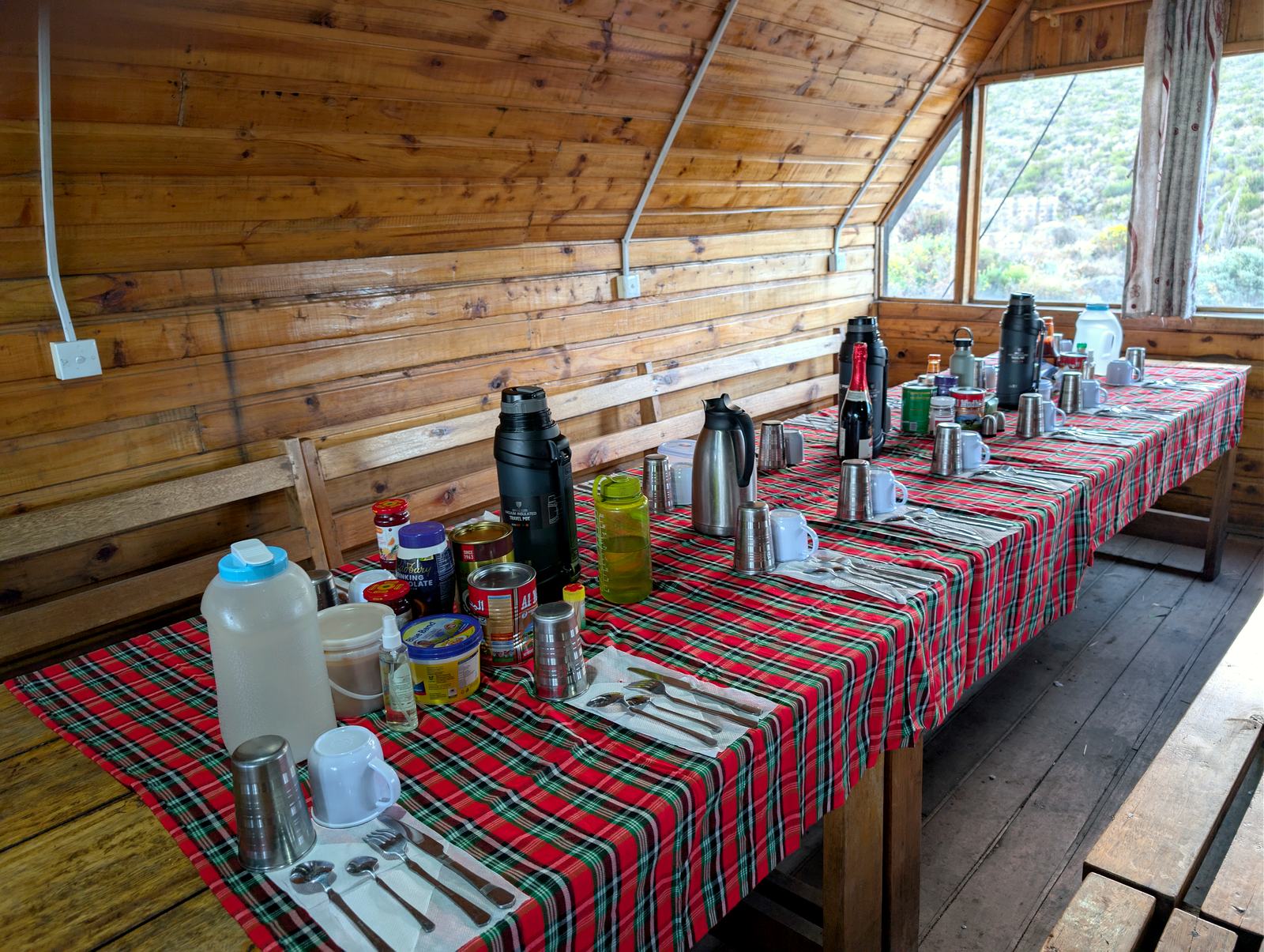
- Hut accommodation: Marangu is the only route in Kilimanjaro that offers permanent huts. The huts are regarded as more comfortable than the campsites. Each hut has several rooms with bunk beds and mattresses, as well as a communal bathroom and toilet. There is also a designated dining area.
- Gentle trail gradients: The path is well-defined and less physically demanding, with few steep climbs, suitable for trekkers with limited hiking experience.
- Shorter Duration Options: Ideal for climbers with tight schedules when extended to 6 days.
- Scenic and unique landscape. The route offers some of the most stunning landscapes you will find on Kilimanjaro. The route also doesn’t merge with the other routes, making its encounters more unique. This makes it the perfect route for second-time climbers who have used the western routes before.
- Direct navigation: Clear trails and infrastructure reduce logistical complexity.
Demerits of the Marangu Route
- Lower acclimatisation profile: The route starts at a relatively high altitude and is more direct, which can lead to a rapid ascent and increased risk of altitude sickness.
- Crowding: As the most popular route, huts can feel crowded during peak seasons.
- Same Ascent and Descent Path: Reduced scenic variety compared to routes with different descent trails.
- Less Wilderness Feel: Infrastructure and traffic reduce the sense of remote mountain exploration.
Tips for a successful climb via the Marangu Route
- Choose a 6 or 7-day itinerary to improve acclimatisation.
- Maintain a slow and steady pace, especially above Horombo Hut.
- Train with cardio and endurance hikes before the climb.
- Stay well hydrated and eat consistently, even when your appetite drops.
- Pack for cold summit conditions, even with hut accommodation.
A typical itinerary for the Marangu Route
Day 1: Moshi to Mandara Hut (2,720 m a.s.l)
Trekking time: 6 hrs
Elevation: +750 m a.s.l
Trekking distance: 8 km
You are picked up at your hotel in Moshi and driven to Marangu gate (1970 m a.s.l). Thereafter, you will start the trek through a stunning forest landscape, arriving at Mandara Hut (2720 m a.s.l.), where you have lunch, and then proceed to climb to the Maundi crater, where you enjoy stunning views of the alpine landscape and the best position for viewing Mawenzi peak. Thereafter, you will descend to Mandara Camp for the night.
Day 2: Mandara Hut to Horombo Hut (3,720 m a.s.l)
Trekking time: 6 hrs
Elevation: +1000 m a.s.l
Trekking distance: 12.5 km
In the morning, you leave Mandara Hut and, soon after, the landscape starts transitioning from rainforest to picturesque heath and moorlands. The trek leads to some of the most picture-perfect views of the Mawenzi and Kibo peaks. You will arrive at Horombo Hut in the early or late afternoon, check in, have lunch, and relax.
Day 3: Horombo Hut (acclimatisation)
Trekking time: 5 hrs
Elevation: 0 m a.s.l
Trekking distance: 4 km
This day is designated for acclimatisation. You will take a short 2 km trek to Zebras Rock, an outstanding volcanic feature. This will give you an altitude gain of around 300 m. Here, you will have the opportunity to embark on a photoshoot before descending back to Horombo, where you will have a late-afternoon lunch and relax for the rest of the day.
Day 4: Horombo Hut to Kibo Hut (4,720 m a.s.l)
Trekking time: 7 hrs
Elevation: +1000 m a.s.l
Trekking distance: 9.5 km
On this day, the hike is a little steeper as you climb directly towards the Kibo cone. The walk will, however, be slow-paced as you enjoy the stunning views of the transition from the moorlands to the barren alpine landscape. You will have lunch at a picnic site along the trail. Early dinner and overnight at Kibo Hut. (4720 m a.s.l)
Day 5: Kibo Hut to Uhuru Peak (5,895 m a.s.l) to Horombo Hut
Trekking time: 12 hrs
Elevation: +1175 m a.s.l / – 2175 m a.s.l
Trekking distance: 6 km (ascent)/ 15.5 km (descent)
On this day, you will wake up at midnight and enjoy a cup of hot black tea. Thereafter, you will go for a trek through the stunning glacier desert, ascending along a zigzag route to Gilman point (5681 m a.s.l.), one of the key points on the Kibo crater rim. Then you will proceed to trek along the rim to the point Stella, another point on the crater (5756 m a.s.l.), and onward to Uhuru Peak, the highest point (5895 m a.s.l.). You will have a short celebration and photo session before descending to Kibo Hut for breakfast. After that, you will descend to Horombo Hut, where you will spend the night.
Day 6: Horombo Hut to Marangu Gate
Trekking time: 6 hrs
Elevation: -1750 m a.s.l
Trekking distance: 20 km
After breakfast, you will have a short farewell session, then start to descend through the stunning rainforest towards the Marangu gate. At the entrance, you will meet your driver for the transfer to Moshi. You are dropped off at your hotel.
Conclusion
The Marangu Route offers a comfortable and well-structured approach to Mount Kilimanjaro, distinguished by its hut accommodation and clearly defined trails. While it has a reputation for lower summit success, this is mainly due to overly short itineraries. When climbed over 6 or 7 days, Marangu can deliver solid acclimatisation and respectable summit success, particularly for trekkers seeking simplicity, shelter, and a less technical ascent. For climbers who value comfort over wilderness solitude and are willing to extend their itinerary, the Marangu Route remains a viable and rewarding path to Uhuru Peak.
Ready to climb Kilimanjaro? Explore our 7 day Machame Route climb, 7 day Marangu Route climb and 10 day Lemosho Route climb, or contact us and we will help you choose the right route and dates.