

The Great Wildebeest Migration is one of the most famous animal movements in Africa. It takes place in the Mara–Serengeti ecosystem, which straddles the border between Kenya and Tanzania. Whether you plan a migration safari on Tanzania’s Serengeti side or in Kenya’s Masai Mara, different parts of this vast wilderness offer exciting experiences at different times of the year. In this guide we explain what to expect on a migration safari month by month.
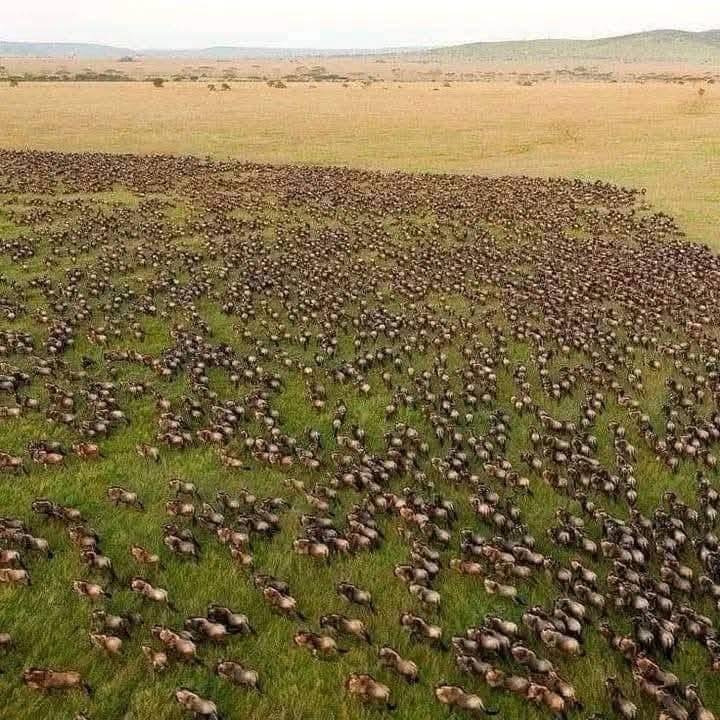
Migration safari in January
January is one of the most popular months for a safari, as it is usually a drier spell between the short and long rains, which makes game viewing easy and rewarding. It is also the start of the calving season, when the herds give birth on the southern Serengeti plains around Ndutu. Coming after the short rains, there is plenty of fresh grass to feed about 1.5 million wildebeest and their calves. Because the Ndutu plains are close to the Ngorongoro Crater, this is a perfect time for a combined Serengeti and Ngorongoro safari.
Migration safari in February
February is usually dry too, and game viewing is excellent. It is also one of the busiest months for migration safaris in the southern Serengeti, so it is not the best time if you want to avoid other visitors. Calving is at its peak, with up to 8,000 births a day. The scenes are dramatic as lions and spotted hyenas try to take calves soon after birth. Sometimes you can see the female wildebeest forming a ring around mothers giving birth and pushing back the hyenas together when they try to attack.
Migration safari in March
The first half of March is often fairly dry, and calving continues through the month. The long rains can start from mid to late March, and visitor numbers fall towards the end of the month. The main downside of a March migration safari is that rain can make game viewing harder in Ngorongoro and other parks, as the green grass lets wildlife spread out. On the plus side, March is very affordable, as many camps and lodges offer lower rates.
Migration safari in April
April is usually the wettest month in the Serengeti. The calves born from January to March are now stronger and graze alongside their mothers as the herds start moving north-west towards the Moru and Simba kopjes. April is the hardest month to track the herds, as the lush grassland everywhere lets them follow different, unpredictable routes. The advantages are that the park is quiet and the rates are very competitive. The scenery is also beautiful for photography, with wide stretches of green grassland and lush woodland.
Migration safari in May
In May the calves are stronger and the herds move faster towards the central and western Serengeti, with the west-central area the centre of the migration. Many visitors at this time stay in the Seronera area of the central Serengeti, which has the widest choice of accommodation at every budget level. This makes May a great month for budget travellers. The Grumeti reserve on the western edge of the Serengeti, on the other hand, is popular with travellers looking for exclusive accommodation, and it is perfectly placed for following the herds towards the Grumeti River.
Migration safari in June
In June the herds are in the western corridor and start moving north. This is the time of the Grumeti River crossings, which usually take place from June to early July, and of the rut, when the bulls fight for mates. Towards the end of the month the first herds begin to reach the northern Serengeti around Lobo, and their numbers grow as the month goes on. Mara River crossings in June are uncommon. June is the start of the long dry season, which makes it a good time for game drives.
Migration safari in July
In July the herds move further north towards the Mara River. The northern Serengeti, around Kogatende and the Lamai wedge, fills with herds, and the river crossings start at crossing points such as Makutano and others near Kogatende. Some herds carry on into the Mara Triangle and the Masai Mara. From mid-to-late July the Mara River crossings are under way, with the herds moving back and forth between the Masai Mara and the Mara Triangle as they follow the grass.
Migration safari in August
August is one of the best months for a migration safari in the Masai Mara and the northern Serengeti. In the Masai Mara, the river crossings are frequent, especially along the stretch between the main reserve and the Mara Triangle. Several balloon operators fly along the river, giving one of the best views of the migration. Besides the crossings, the Masai Mara has a very high lion density, so there are excellent chances of seeing hunts on the plains. You can stay in the reserve or in the conservancies to the north and east, where the Serengeti herds spread out and are joined by the smaller Loita herds. Remember that many herds also stay in the northern Serengeti at this time, so river crossings continue on the Tanzanian side too, depending on where the grass is.
Migration safari in September
In September you still have good chances of seeing river crossings in both the Masai Mara and the northern Serengeti. It is also a great month to see the herds in the Mara conservancies. Here guests can enjoy a closer encounter with the herds on walking and fly camping safaris, horseback safaris and open-sided game drives, which are not allowed in the national reserve. There are also good chances of seeing hunts on the plains.
Migration safari in October
October is the last month of the Masai Mara season. River crossings still take place, and towards the end of the month the herds start leaving the Masai Mara and head south into the Serengeti. The herds in the northern Serengeti also move south, through the Lobo area in the north-east and down the eastern side of the park. Towards the end of the month the herds move on towards the big cat country of the Gol mountains.
Migration safari in November
The migration in the eastern Serengeti peaks in November, with most of the herds spread between the eastern and south-eastern Serengeti. This is a great time to watch hunts around the Gol mountains, where the big cats are alert to the sudden arrival of so much prey. The eastern migration is good for travellers looking for an exclusive safari, as there are only a few camps in the region. November is the start of the short rains.
Migration safari in December
The short rains continue into December. Most of the herds have now moved south, towards the area around Namiri Plains and the Gol mountains, and some reach the southern Ndutu plains, where calving will begin. Through December and January the herds gather on the southern plains, ready for the calving season.
Ready to see the migration? Join our 5 Day Wildebeest Migration Safari in the Masai Mara for the river crossings from July to October, or combine Kenya and Tanzania on our 6 Day Masai Mara, Serengeti and Ngorongoro Safari. For your camera, read our tips on great migration photography. Contact us and we will plan the right migration safari for your dates and budget.