

Mount Kilimanjaro, Africa’s highest mountain, is not a single peak but a massive volcanic massif composed of three distinct cones: Kibo, Mawenzi, and Shira. Each cone has its own character, geological history, and climbing challenges, shaping the unique experience of trekking this iconic mountain. Understanding these cones and their peaks gives climbers a clearer perspective of what it truly means to reach the “roof of Africa.”
Kibo: The Main Cone and Summit Zone
At the heart of Kilimanjaro lies Kibo, the largest and highest cone, which rises to 5,895 meters at its summit. Kibo is a dormant volcano with a broad, rounded shape, in contrast to the nearby jagged Mawenzi peaks. Most routes to the summit are destined for Kibo, culminating in a climb along its crater rim to Point Uhuru, the highest peak in Kilimanjaro.
Peaks in Kibo crater
- Gilman point. As climbers ascend Kibo, they first encounter Gilman’s Point on the eastern rim. This point, at 5,681 meters, is often considered a milestone for climbers, marking the transition from the steep slopes to the rim of the crater. For many, reaching Gilman’s Point is already a significant achievement, though it is not the ultimate summit.
- Stella point. From Gilman, trekkers continue along the crater rim to Stella Point, slightly higher at 5,756 meters. Stella Point offers spectacular panoramic views of the crater and the surrounding alpine desert, especially at sunrise, when the light illuminates the rugged volcanic landscape.
- Uhuru Peak. This is the highest point of Kibo and the summit of Kilimanjaro itself, standing at 5,895 meters. Reaching Uhuru Peak is a triumph, marking the highest point on the African continent. The last stretch from Stella Point to Uhuru Peak, while not technically difficult, is physically and mentally demanding. Climbers face thin air, exhaustion, and freezing temperatures, making this final push a test of endurance and perseverance.
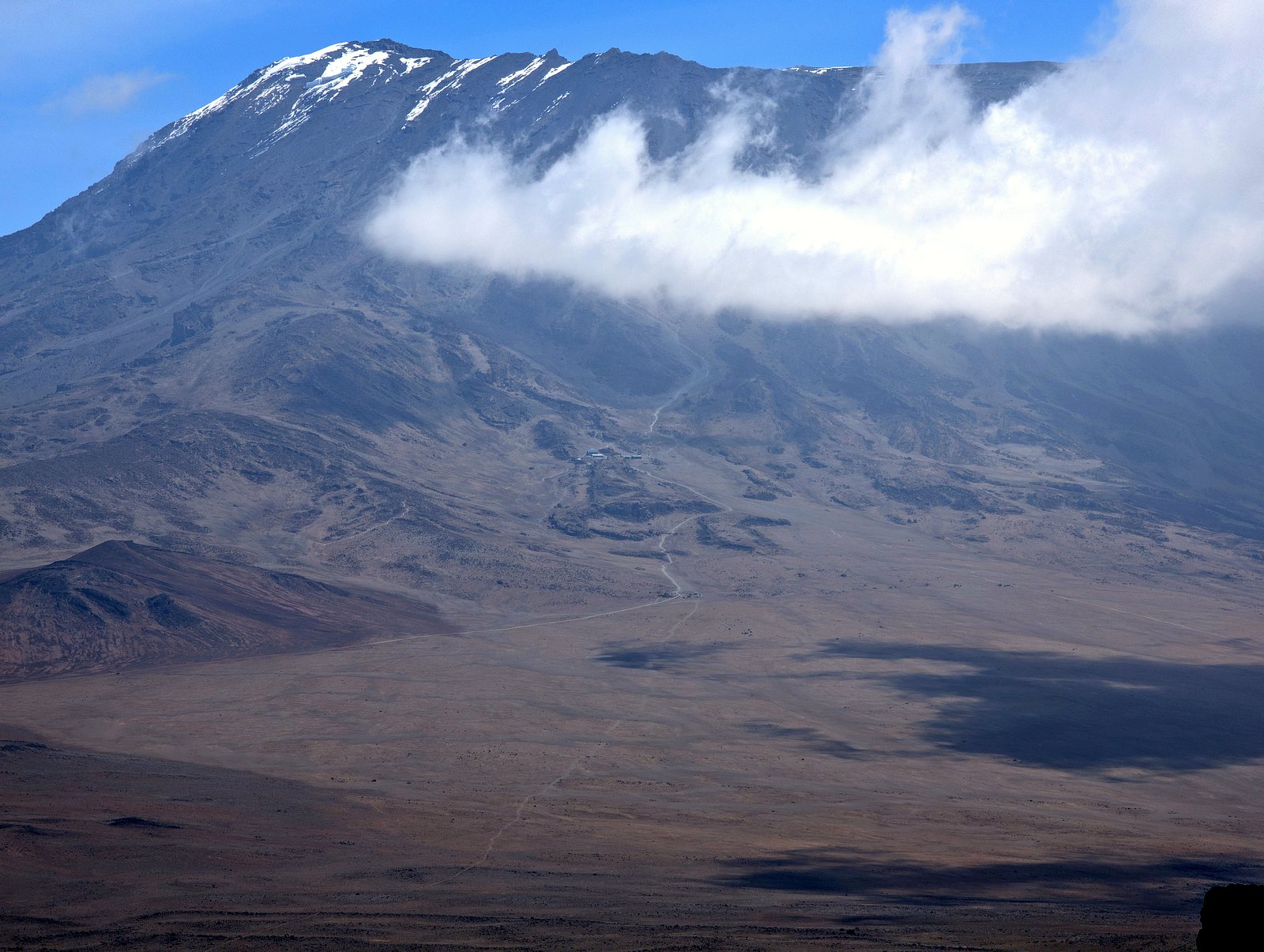
Mawenzi: The Rugged and Dramatic Cone
To the east of Kibo rises Mawenzi, Kilimanjaro’s second-highest peak at 5,149 meters. Unlike Kibo, Mawenzi is sharply jagged and highly eroded, with dramatic spires and ridges that reflect its more violent geological past. The rugged nature of Mawenzi makes it unsuitable for casual trekking, as summiting it requires advanced climbing skills and technical equipment.
Even for climbers who do not attempt Mawenzi directly, its presence dominates the skyline. The jagged peaks form a striking backdrop visible from the Saddle and other vantage points, creating one of the most photographed scenes on the mountain. Mawenzi’s imposing shape emphasizes the contrast between the approachable Kibo summit and the wild, untamed sections of Kilimanjaro. Its highest point is Hans Meyer Peak. Mawenzi’s summit is rarely climbed and needs special permission, but trekkers on the Rongai route get close to it at Mawenzi Tarn Camp, set right below its jagged peaks.
Shira: The Ancient Plateau
At the western edge of Kilimanjaro lies Shira, the oldest of the three cones. Unlike the others, Shira is not a towering peak but a wide, high-altitude plateau formed from a collapsed volcanic cone. Its vast, gently sloping terrain offers expansive views of both Kibo and Mawenzi, giving climbers a sense of the mountain’s scale.
Shira is also an important part of several climbing routes, including the Shira, Machame, Northern Circuit, and Lemosho routes. Trekking across the Shira Plateau offers a gradual ascent, allowing climbers to acclimatize before the more strenuous sections above. The plateau is dotted with unique alpine vegetation and volcanic rock formations, reflecting the ancient geological forces that shaped Kilimanjaro. The cone has the Johnsell Point as its highest point at 3962 m a.s.l. Importantly, the Shira cone is in the acclimatization zone, and it would benefit you to explore the plateau for a longer period before the final push to Uhuru Peak.
Conclusion: Appreciating Kilimanjaro’s Cones and Peaks
Mount Kilimanjaro is more than just a single mountain—it is a volcanic massif shaped by three distinct cones, each offering its own challenges, scenery, and role in the climbing experience. Kibo, with its iconic crater rim and Uhuru Peak, is the ultimate destination for trekkers, testing endurance, acclimatization, and determination. Mawenzi, with its jagged spires and dramatic ridges, is the second-highest but the least explored of the three peaks, as it is a technical climb. However, its stunning landscape dominates the skyline and reminds climbers of the mountain’s raw, untamed character. Shira, the ancient plateau, provides a gentle introduction and crucial acclimatization zone, allowing trekkers to prepare for the higher altitudes and the final push to Kibo’s summit.
Ready to climb Kilimanjaro? Explore our 7 day Machame Route climb, 7 day Marangu Route climb and 10 day Lemosho Route climb, or contact us and we will help you choose the right route and dates.