

The Lemosho Route is widely regarded as one of the most scenic and successful paths to the summit of Mount Kilimanjaro. The route starts from the southwestern side of the mountain at the Londorossi Gate, then crosses the Shira Plateau to ascend on the eastern side. The route offers a relatively flat trail that almost feels like walking on a flat surface. This makes it one of the least difficult 4 routes for summiting Kilimanjaro. The route also offers some of the most stunning alpine landscape views, with its lower reaches featuring incredibly alluring forest landscapes. Though the route starts high up at 2250 m a.s.l., its gradual ascent still enables successful summiting. The route was actually established as an upgrade to the Shira route. The route converges with the Machame, Shira, and Umbwe routes along the way towards Barafu Camp.
Trekking experience
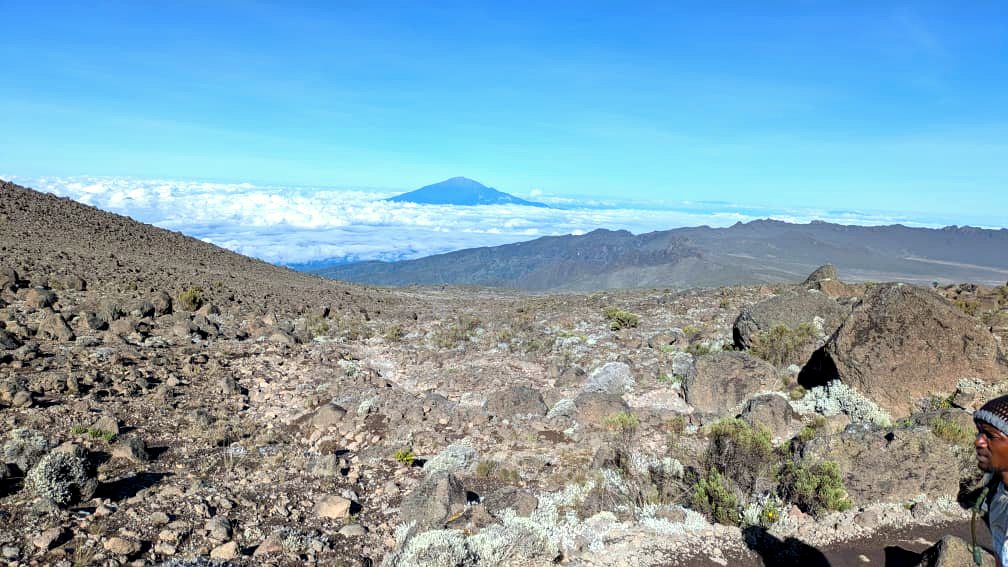
The Lemosho Route offers a balanced mix of challenge and scenic reward. Starting in lush rainforest, the trail gradually climbs to moorlands and volcanic landscapes, giving trekkers the chance to acclimatise steadily while enjoying panoramic views of Kibo Peak and the Shira Plateau. Iconic features like the Lava Tower and Barranco Wall add both adventure and visual interest, providing short, steep climbs that test endurance without being technical. The route’s gradual profile, varied terrain, and quiet early sections make it ideal for first-time climbers and those seeking a scenic, well-paced ascent.
Summit success rate
The Lemosho Route is favoured for its gradual ascent profile, which significantly reduces the risk of altitude sickness. Success, however, is highly determined by the number of days you spend on the climb; the more you stay, the better. Below is data from our statistics on the success rate via this route:
- 6 days: 65–80% success
- 7 days: 80–90% success
- 8 days: 90–95% success
Most guides recommend the 8-day itinerary, as it balances acclimatisation and total trek time, making it one of the most reliable routes to the summit.
Merits of the Lemosho Route
- Excellent acclimatisation: The “climb high, sleep low” approach ensures the body adjusts gradually to altitude.
- High summit probability: Well-planned itineraries give climbers the best odds of reaching Uhuru Peak.
- Scenic diversity: From rainforest to moorlands and volcanic landscapes, Lemosho offers a visual feast at every stage.
- Lower early crowds: Unlike Machame or Marangu, the early sections are quieter, enhancing the wilderness experience.
- Suitable for Beginners: Its pacing and support system make it ideal for first-time Kilimanjaro climbers.
Demerits of the Lemosho Route
- Higher cost: Longer duration and additional logistics make it more expensive than shorter routes.
- Time commitment: 7–8 days may not suit travellers with limited schedules.
- Physical demands: Daily hikes and the challenging summit night require fitness and stamina.
- Altitude and weather Risks: Even with proper acclimatisation, climbers must prepare for cold nights and sudden weather changes.
- Crowding: You might see crowds after the route converges with the other routes at Barafu camp.
Tips for a successful climb via the Lemosho Route
- Opt for an itinerary of at least 8 days to maximise your summit chances.
- Train in advance with cardio and hikes at elevation if possible
- Hire experienced guides for pacing, health monitoring, and logistics.
- Hydrate and eat well to support acclimatisation.
- Pack proper gear for cold, wind, and unpredictable mountain weather.
A typical itinerary for the Lemosho Route: day-by-day account and what to expect
Day 1: Moshi to Big Tree Camp (2780 m a.s.l)
Trekking time: 3 hrs
Elevation: +396 m a.s.l
Trekking distance:5 km
You drive from Moshi to Londorossi Park Gate. Once the check-in is approved, you will drive to the trailhead at Lemosho Glades, where you will gently start the climb towards the camp. You arrive at the Big Tree Camp at lunch hour. Afternoon spent relaxing and energizing for the following day trek.
Day 2: Big Tree Camp to Shira 1 Camp (3510 m a.s.l)
Trekking time: 3 hrs
Elevation: +730 m a.s.l
Trekking distance:7 km
After breakfast, you will start the trek gently, passing through the rainforest before reaching stunning moorlands with flourishing wildflowers. Lunch is served in a stunning valley before slowly proceeding to Shira 1 camp in the evening.
Day 3: Shira 1 Camp to Shira 2 Camp (3890 m a.s.l)
Trekking time: 3 hrs
Elevation: +380 m a.s.l
Trekking distance: 7 km
The day is largely focused on acclimatisation. You will trek across the expansive Shira Plateau, formed by a collapsed caldera, taking in short scenic trails along the way. The plateau offers breathtaking views of the Western Breach, a dramatic gap in Kibo’s caldera created by ancient lava flows. Giant lobelias, senecios, and groundsels dot the landscape, making it a photographer’s dream. You will reach Shira 2 Camp by late afternoon for an overnight stay and rest.
Day 4: Shira 2 Camp to Barranco Camp (3960 m asl)
Trekking time: 7 hrs
Elevation: +70 m a.s.l
Trekking distance:10 km
From Shira 2, you continue southeast into higher moorlands, gradually approaching the iconic Lava Tower (4,600 m). This volcanic feature, sometimes called the Shark’s Tooth, marks the halfway point to the summit. After passing the Lava Tower, the trail joins a junction leading toward the Arrow Glacier before descending slightly to Barranco Camp. The ascending and then descending throughout the day helps further acclimatise your body for the more strenuous summit push.
Day 5: Barranco Camp to Karanga Valley (3995 m a.s.l)
Trekking time: 5 hrs
Elevation: +35 m a.s.l
Trekking distance:5 km
The day begins with a steep descent to the base of the Great Barranco Wall. You then tackle the famous wall climb, a short but intense ascent that tests both fitness and determination. Once at the top, you can pause to admire sweeping views of the surrounding alpine scenery. After descending from the wall, the trail leads into the Karanga Valley before a final steep climb to Karanga Camp, where you will spend the night.
Day 6: Karanga Camp to Barafu Camp (4673 m a.s.l)
Trekking time: 4 hrs
Elevation: +678 m a.s.l
Trekking distance:3.5 km
After breakfast, you leave Karanga Valley for Barafu Camp, the pre-summit base. The trail crosses arid, lunar-like terrain, gradually ascending to the camp. Once there, you can relax and enjoy the views while preparing for the summit. Early dinner is served to help you sleep early in readiness for the midnight trek.
Day 7: Barafu Camp to Mweka Camp (3050 m a.s.l) via Uhuru Peak (5895 m a.s.l)
Trekking time: 6 hrs/ – 8 hrs
Elevation: +1222 m a.s.l/ – 2935 m a.s.l
Trekking distance:5 km / – 11.5 km
You will wake at midnight to begin the final ascent to Uhuru Peak, Kilimanjaro’s highest point. The climb is steep and challenging, moving through scree and rocky terrain. Sunrise at the summit reveals spectacular ice cliffs, the crater rim, and distant views of Mawenzi Peak. After celebrating the achievement, you descend back to Barafu Camp for a short rest and breakfast, then continue down to Mweka Camp for the night.
Day 8: Mweka Hut to Mweka Gate
Trekking time: – 4 hrs
Elevation: – 1470 m a.s.l
Trekking distance: – 9km
The final day is a gentle descent through moorlands and rainforest. Enjoy the scenery at a relaxed pace as you make your way to Mweka Gate, stopping for a picnic lunch before returning to Moshi or Arusha to conclude your adventure.
Conclusion
The Lemosho Route stands out as one of the most rewarding ways to summit Mount Kilimanjaro, combining exceptional scenery, a well-paced ascent profile, and consistently high summit success rates. With its gradual acclimatisation, diverse landscapes, and quieter early sections, it is particularly well suited to first-time climbers, photographers, and trekkers seeking both comfort and challenge. While the route requires a longer time commitment and converges with other trails near Barafu Camp, choosing an 8-day itinerary significantly improves acclimatisation and pushes summit success to as high as 95%. For climbers prioritising safety, scenery, and a reliable path to Uhuru Peak, the Lemosho Route remains one of the most balanced and dependable options on Kilimanjaro.
Ready to climb Kilimanjaro? Explore our 7 day Machame Route climb, 7 day Marangu Route climb and 10 day Lemosho Route climb, or contact us and we will help you choose the right route and dates.