

The western Serengeti stretches from the Moru kopjes north-west to beyond the Grumeti River. It takes in the western part of the national park as well as the Grumeti Game Reserve and the Ikona Wildlife Management Area. The region stands out for its varied landscape of savannah plains, river valleys and rolling hills, with open grassland, acacia woodland and thick riverine forest along the rivers. Also known as the western corridor, it is a hotspot for both migratory and resident wildlife.
Grumeti River crossings and the migration through the western corridor
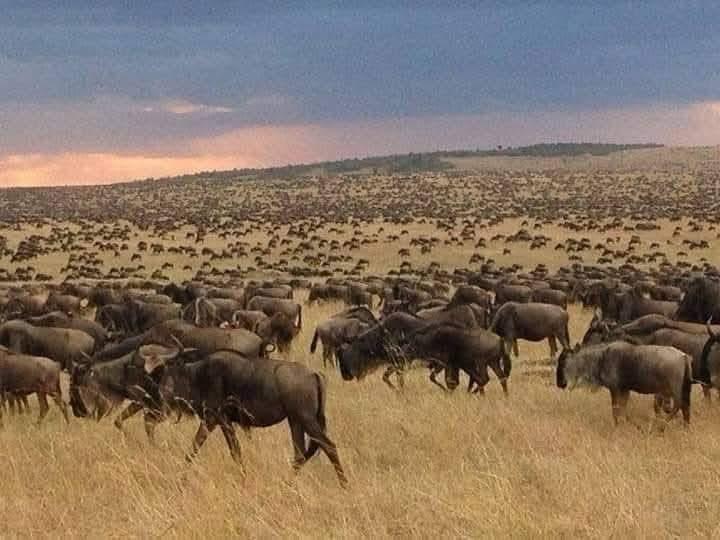
The western corridor migration begins after the calving season ends. From April the herds start moving north-west at a slow pace, as the calves are still young, although they can now graze on their own. The herds often move in spectacular columns that can stretch for kilometres. The lion prides around the Moru and Simba kopjes are the first serious predators they meet, and with the calves still easy prey, the chances of seeing a hunt are high. From the Moru kopjes some herds spread towards the central Serengeti while others head west, depending on where the grass is.
The western corridor migration also marks the start of the rut, the mating season, when the bulls gather receptive cows. You will often see bulls locking horns as they fight to assert their place in the herd. The movement north picks up pace in May and June as the herds push west and north towards the Grumeti River. At this time the herds in the Grumeti area are an impressive sight. The lions around Sasakwa hill are known as strong hunters, and hunting scenes here are common. The Grumeti River crossings usually take place from June to early July. Though not as famous as the Mara River crossings, the Grumeti is still a big obstacle for the herds, with large Nile crocodiles waiting in its pools.
Where to stay in the western Serengeti
The western corridor has a wide range of accommodation along the western side of the Serengeti and in the nearby Grumeti Game Reserve and Ikona Wildlife Management Area. The choice runs from luxury to standard and budget, each giving its own experience of the migration.
Top accommodation for a western Serengeti migration safari
Kirawira Serena Camp
Category: Luxury
Good for: Couples, honeymooners, families with older children (7 years and above)
Kirawira Serena Camp sits on a hill in the western corridor of the Serengeti National Park, looking west over the plains. The migration is usually best here from May to July, when the herds gather on the plains around the camp before heading north to cross the Grumeti River, which makes it a good base for the Grumeti River crossings. The camp has an elegant colonial style, with 25 tents on raised wooden platforms, each with its own veranda and set well apart for privacy. There is also a swimming pool, and guests can add a hot air balloon flight or a day trip to Lake Victoria. Grumeti airstrip is about 14 km away.
Singita Faru Faru Lodge
Category: Luxury
Good for: Solo travellers, couples, groups of friends or extended family, families with children
Singita Faru Faru Lodge is in the Grumeti Game Reserve, which covers about 350,000 acres (roughly 140,000 hectares) on the western edge of the Serengeti National Park. The lodge sits on a gentle slope overlooking a busy waterhole and the Grumeti River. Faru Faru is on a major migration route, usually from about May to July, and is one of the best choices for seeing the Grumeti River crossings. The area around the lodge is home to one of the main lion prides in the Grumeti reserve, so hunting encounters are common. Guests can go on open-sided game drives, walking safaris and night game drives, which add a lot to the migration experience. Singita Faru Faru has 9 suites, including a family suite, and several two-bedroom options, which makes it a good choice for families travelling together.
Mbalageti Serengeti
Category: Standard
Good for: Solo travellers, couples, families with children
Mbalageti Serengeti sits on Mwamyeni hill, overlooking the Dutwa plains and the Mbalageti River in a quiet part of the western corridor. It is a good choice for guests who want a migration safari in both the western corridor and the central Serengeti. The Grumeti River crossings are further north, a longer game drive from the lodge, and the nearest airstrip, Grumeti, is about 45 minutes away. Mbalageti has 40 rooms, ranging from luxury suites and tented chalets to lodge rooms and family suites.
Serengeti Simba Lodge
Category: Budget
Good for: Solo travellers, couples, families with children
Serengeti Simba Lodge is in the Ikona Wildlife Management Area, a community wildlife area between the Serengeti and the Grumeti reserve. The herds are usually here in May and June as they move north, and you may also see some herds in October on their way south. Guests can enjoy views of the herds grazing on the open plains close to the lodge. Because it is outside the national park, guests at Serengeti Simba Lodge can also enjoy open-sided game drives, night game drives and walking safaris in the Ikona area. The lodge has 15 tented suites, including a secluded family house for up to six people.
Singita Sasakwa Lodge
Category: Luxury
Good for: Couples, groups of families, families with children
Singita Sasakwa sits on Sasakwa hill in the Grumeti Game Reserve. The grassy plains below are a refuge for big numbers of the Serengeti herds in May and June. The lions of the Sasakwa area are known as strong hunters, and seeing a hunt here is quite common. Sasakwa has elegant private cottages, each set apart for privacy, and it is ideal for families, couples and groups of families looking for home-style luxury in the western Serengeti.
FAQ
Is a western Serengeti migration safari good value?
The western Serengeti has more budget-friendly accommodation than the northern and eastern Serengeti. The most affordable options are in the Ikona Wildlife Management Area. The Ndabaka campsite near Ndabaka Gate, at the far western end of the park, is also a good choice for guests looking for basic, budget-friendly camping.
Why should I go on a migration safari in the western Serengeti?
The western Serengeti has the Grumeti River crossings, one of the highlights of the whole migration. It also has plenty of big cats, giving great chances of seeing hunts on the plains. Many guests also choose the Grumeti area for activities such as horse riding, walking safaris and open-sided game drives, which are not allowed inside the national park.
What is the weather like during the western Serengeti migration season?
The migration is in the western corridor from about May to July. May marks the change from the long rains to the long dry season. There may be some rain, especially early in the month, but less than in March and April. June and July are usually dry, and game viewing is good throughout.
Which other places can I visit on a western Serengeti migration safari?
From the western corridor you can take a day trip to Lake Victoria, which is about 1.5 to 3 hours away depending on where you are staying. The Ngorongoro Conservation Area, on the south-eastern side of the Serengeti, also offers excellent game viewing and is easy to add to your western corridor safari.
Ready to see the migration in the Serengeti? Explore our 7 Day Best of Tanzania Safari, or combine Kenya and Tanzania on our 6 Day Masai Mara, Serengeti and Ngorongoro Safari. For more seasonal camps, see our guide to the top migration mobile camps in the Serengeti. Contact us and we will plan the right migration safari for your dates and budget.