

Mt Kilimanjaro is one of the world’s seven summits. Towering at 5895 m a.s.l the mountain is both a challenging and exciting experience. In the climb, which on average lasts a week, you will definitely learn a lot. You will probably see things that you should have done differently to make it a more exciting and efficient experience. In this guide, we share some of the things most travellers find would have made a difference in their experience if they had prior knowledge before the climb.
Though Kilimanjaro is not a technical climb, it is brutally demanding.
Kilimanjaro doesn’t require ropes or ice axes to summit Uhuru Peak, its highest point. However, don’t make the mistake of thinking that it is just an easy climb that you can climb when you are not prepared. During the climb, you will need to be in good shape and have stamina to cover 5-20 km a day for a week. Some of the stretches, like the Barranco Wall, are steep and tough; you will need the best endurance and patience to reach the rooftop of Africa. Be adequately prepared physically and mentally to have an easy climb.
Altitude is the real enemy.
What most first-time climbers don’t know is that you can be fit but still struggle to summit Kilimanjaro due to altitude sickness. In fact, a significant percentage of climbers who attempt the climb fail midway when they critically fall ill. Altitude training is becoming more common among climbers, where you train in simulated high-altitude chambers days before the climb. Other trekkers opt to train by embarking on slightly higher mountain climbs, such as Mt Meru, or in their home country. Besides, to increase the chances of a successful climb without altitude problems, we recommend taking the longer route and climbing slowly. Ensure that the climbing package includes at least one acclimatisation day, during which you gradually acclimate to high altitude, then descend to a lower camp for the night. The more acclimatisation days you have in a package, the greater your chances of success. Should you experience signs of altitude sickness during the climb, inform the guide so he can take immediate action.
Be prepared for basic accommodation and amenities.
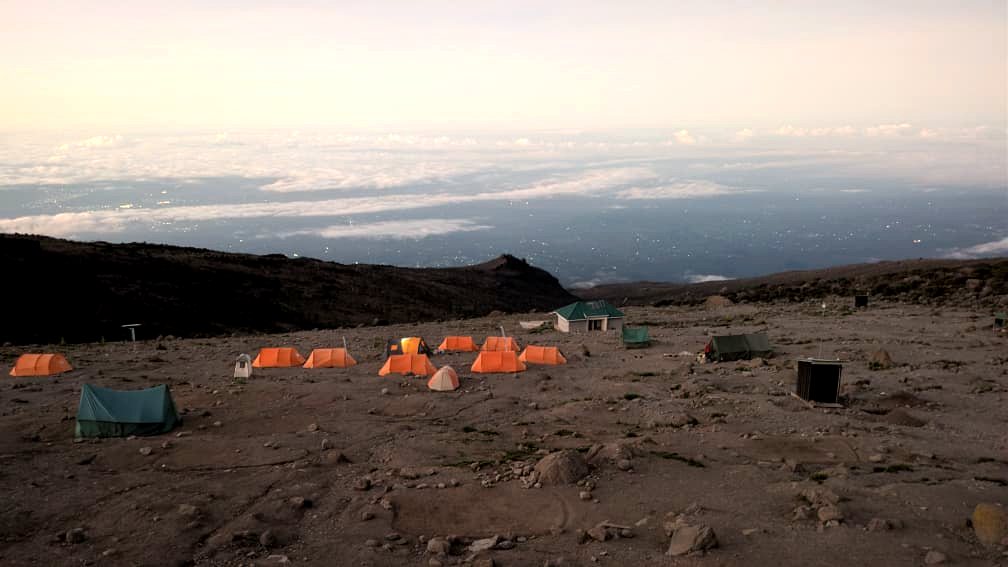
In Mt Kilimanjaro, you won’t find the regular luxury hotels and camps you find in other African destinations. Here, you will have to choose between a basic mobile tent or the mountain huts available on the Marangu route. The tents are basic and can be one- or two-man, depending on whether solo or couples are spending the night together. On the Marangu route, the huts are basic and shared with strangers. Yes, this may seem off, but that is it! You shouldn’t also expect showers you find elsewhere during a safari. Here, the crew has to keep fetching water, so it is used sparingly. Beyond Barafu camp, there is no water at all, and they have to fetch it downstream. You will be served warm water in a small bowl for washing every day. You should also be prepared to use pit latrines, which are built at the campsites.
The mountain is colder than you can imagine
You may be tempted to think that Kilimanjaro isn’t as cold as being in a tropical region. Kilimanjaro spans 5 climate zones, each with its own climatic conditions. The temperatures decrease as you climb higher, and the arctic zone at the summit often has snow and ice. Here, temperatures can range from -7 to -28 degrees Celsius. The persistent winds at the peak even make it feel colder. You will therefore need enough layered clothing for the body and the right head, hand, and foot protection.
Summit night is the most challenging part.
No one really prepares you for how mentally challenging summit night is. You wake up around midnight after just a few hours of sleep. It is dark, freezing, and you climb slowly for hours with only your headlamp lighting the way.
The slope feels endless, and this is usually the longest stretch you will have to climb, and you will do much of the descending the same day. Every step requires effort. Many climbers question why they signed up. But once the sun rises over the African plains and you stand at Uhuru Peak, the exhaustion fades into pride. Knowing this mental battle is coming helps you prepare emotionally. Break it into small goals—just reach the next marker, the next step, the next breath. We also advise climbers not to rush the climb in the lower regions to conserve energy for the final stretch.
Food and appetite can become a challenge.
At high altitude, many people lose their appetite. Yet your body desperately needs calories for energy. During the climb, the food is usually carb-heavy because carbs are ideal for endurance. Carbohydrates replenish muscle glycogen, protect against muscle deterioration, and typically use less oxygen during metabolism, making them suitable for a high-altitude environment. Some studies suggest that a high-carb diet can help reduce the risk of high-altitude sickness. However, during the climb, some climbers experience low appetite, ‘altitude anorexia’. To prevent this, we usually encourage climbers to eat on a schedule and stay hydrated. It is also a good idea to bring some of your favourite sweets for the hike.
Drinking water is essential.
In mountain climbing, hydration is critical. Drinking water reduces the chances of developing altitude sickness. Usually, climbers are encouraged to take at least 3 litres of water per day during the climb. It is also a good idea to ask your guide about the safety of the water you drink during the climb. Usually, water is sourced from mountain streams and boiled, purified, and treated to make it safe to drink. Poorly treated water can lead to diarrhoea or put you at risk of suffering from diseases like cholera and typhoid.
The guides and porters are the backbone of your success.
Your experience depends heavily on your crew. Kilimanjaro climbs are supported by guides, cooks, and porters who carry equipment, set up tents, and prepare meals. The guide should be well-trained not only to guide at the destination but also to provide support in an emergency. Most responsible tour operators ensure that the crew is exceptionally trained for rescue and for handling incidents of altitude sickness or personal accidents. Before booking a tour, it is good to ensure that the tour company pays fair wages, provides proper gear, and properly trains its staff. Importantly, most climbers make the mistake of booking their trip with extremely cheap operators who may be underpaying their guides and providing poor service. Such a company not only compromises your overall experience but also your safety.
It is good to tip
Another thing you should know before embarking on a climbing tour of Kilimanjaro is that tipping plays a critical role in supporting the livelihoods of the crew. Usually, the crew has to regularly brave the tough climatic conditions to ensure the success of your trip. The team has been separated from their families for almost a week, and sometimes they have to work late into the day before or after the day treks just to give you the best experience. For this reason, we recommend tipping them as a token of gratitude. There is no minimum tipping amount, though we recommend at least 20 USD per person per day.
The descent is more challenging than expected.
Most people focus on reaching the summit, but descending can be equally challenging. Your knees take a beating, and fatigue increases the risk of slips and falls. Trekking poles are not optional—they significantly reduce pressure on your joints. Proper boots with ankle support also make a huge difference. Importantly, trails on Kilimanjaro have a descent of over 2700 m a.s.l. the same day after summiting (over 10 km), which is one of the longest walks you can have in a day.
It is more mental than physical.
Finally, Kilimanjaro tests patience, humility, and persistence. Sometimes you get uncomfortable and doubt your chances of succeeding. Success often comes down to mindset. You should always stay positive despite the challenges that come your way. Don’t be under pressure to rush; keep a pace you can breathe at. Climbing Mount Kilimanjaro is not about speed but about endurance and patience. Again, always celebrate small milestones; they mean a lot to your overall success.
Ready to climb Kilimanjaro? Explore our 7 day Machame Route climb, 7 day Marangu Route climb and 10 day Lemosho Route climb, or contact us and we will help you choose the right route and dates.