

The Great Migration of the Serengeti and Masai Mara is one of the most sought-after safari experiences in the world, and the largest overland movement of animals on the planet. The herds move clockwise around a loop of roughly 1,000 km and take about a year to complete one cycle, so the migration happens all year round and you can plan a migration safari at any time of year. In this guide we cover the most important things to think about when planning your migration safari.
When are you going to travel?
First, we recommend that you start planning your migration safari at least six months before your travel date. The migration attracts many visitors, so if you book at the last minute you may find the best camps are full. When choosing your dates, think about:
- The experience you want. Do you want to see the calving season, the Mara River crossings or the Grumeti River crossings? Each of these happens at a particular time of year: calving from about January to March, the Grumeti crossings from about June to early July, and the Mara River crossings from July to October, usually best in August and September.
- Your budget. For a budget-friendly migration safari, the Masai Mara season (July to October) and the times when the herds pass through the Seronera area of the central Serengeti are the best times to travel.
- Whether you are travelling with children. The Masai Mara is very family friendly, with many family tents and short travel times. In the Serengeti, the Grumeti area and the Seronera area are good choices for families.
Choose the time of year that best fits what you want from your trip.
Where are you going to stay?
The best accommodation puts you as close as possible to the migration action. For the river crossings, camps along the Mara River are the best choice. For the calving season, camps in the Ndutu area of the southern Serengeti and the Ngorongoro Conservation Area are best. If you are travelling on a tight budget, you may choose to stay outside the reserve. Make sure your budget camp is only a short drive from the nearest gate. If you stay in a private conservancy, check that the camp has full rights to carry out activities in the conservancy. In the Serengeti, seasonal migration camps that are set up on the herds’ route are often the best placed for an excellent migration experience. Other things to consider when choosing your accommodation:
- Are you travelling with children or as a family? Check the camp’s age policy, whether it offers the privacy your family wants, and whether the family rooms are interconnecting or separate.
- Are you travelling solo? Check the single supplement, and if possible choose a camp with a shared dining area where you can meet other guests.
- What amenities do you need? You may want good internet, reliable electricity, a hot shower or a private deck. Make sure your camp has everything you need.
What activities do you want to do?
There is a wide range of activities you can enjoy on a migration safari. Some of the most popular are:
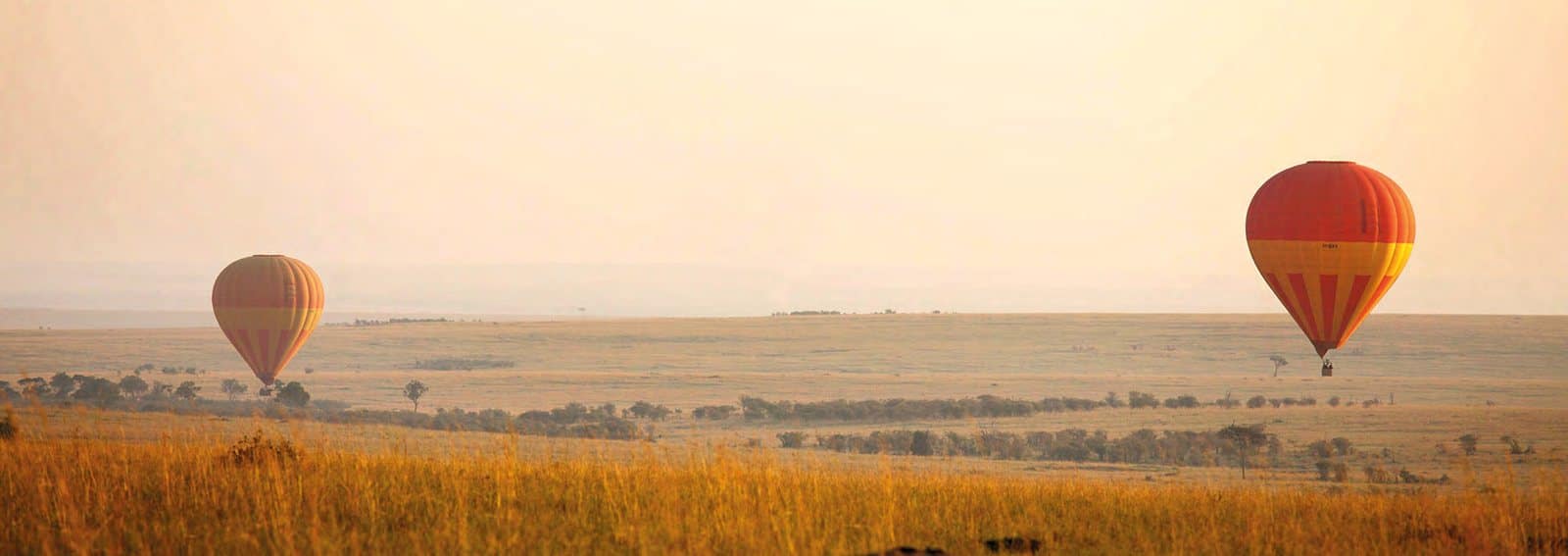
- Hot air balloon safaris. Balloon safaris are one of the most popular migration activities. The early morning flight gives you a sweeping aerial view of the herds on the plains. Most balloon operators are based in the Masai Mara and in the Seronera area of the central Serengeti.
- Walking safaris and fly camping. Walking safaris and fly camping take place in the conservancies to the north and east of the Masai Mara and in the Grumeti reserve in the western Serengeti. On foot you experience the migration up close and in much more detail.
- Horseback safaris. Few things are as thrilling as riding alongside the moving herds. Horseback safaris are mainly offered in the Mara conservancies and the Grumeti reserve.
- Night game drives. Many predators are more active after dark, so night game drives in the migration season give you a good chance of seeing a hunt. They are offered in the conservancies and private reserves, not in the national reserve or national parks.
Which other places will you visit?
Most travellers on a migration safari also visit other places besides the Serengeti and the Masai Mara. On a Tanzania migration safari, Ngorongoro, Lake Manyara, Lake Natron, Tarangire and Lake Victoria are the easiest to combine. A Masai Mara migration safari combines well with Amboseli, Lake Nakuru, Lake Naivasha, the Aberdares, Samburu, Meru, Lewa and Ol Pejeta. Some guests choose a combined Serengeti and Masai Mara safari. During the Masai Mara season, a large part of the herds stays in the northern Serengeti, and river crossings happen on both sides of the border, so a combined safari gives you a fuller picture of the migration.
Your choice of destinations will depend on:
- The season. In the drier months (about January to February and June to October), top game viewing areas such as Amboseli, Ngorongoro, Lake Manyara and Meru are especially rewarding. In the rainy seasons (about April to May and November to December), the birding lakes such as Lake Manyara, Lake Natron, Lake Naivasha and Lake Nakuru are excellent.
- Road or air transfers. If you travel by road, choose destinations within a reasonable drive (ideally under about 7 hours) of the Serengeti or the Masai Mara.
- The number of days. On a 5-day trip you can usually visit two or three destinations, most likely those within a short drive of the Masai Mara or the Serengeti. To reach places further away, such as Samburu, by road, you will need a longer trip to get good value for your money.
- Your budget. Some combinations cost more. For example, a combined Masai Mara and Serengeti safari usually means changing vehicle and guide at the border, or flying between the two, which adds to the cost.
Are you happy with crowds?
Crowds can spoil a safari. The migration attracts many visitors, and the Mara River crossings in particular can draw big crowds. For a quieter crossing experience, consider the Kogatende and Lamai areas of the northern Serengeti. In the Masai Mara, the Mara Triangle on the western side of the reserve is usually quieter than the main reserve.
In the Serengeti, the central migration around Seronera can be busy. The southern Serengeti is usually moderately busy, though it gets busier in January and February. The eastern and western Serengeti are much quieter.
In the Masai Mara, if you want to avoid the crowds outside the river crossings, we recommend staying in the conservancies to the north and east of the reserve.
Ready to see the migration? Join our 5 Day Wildebeest Migration Safari in the Masai Mara for the river crossings from July to October, or combine Kenya and Tanzania on our 6 Day Masai Mara, Serengeti and Ngorongoro Safari. Contact us and we will plan the right migration safari for your dates and budget.