

The Masai Mara and the Serengeti are part of the Mara–Serengeti ecosystem, one of the most important and diverse ecosystems on earth. The two parks lie on either side of the Kenya–Tanzania border: the Serengeti National Park on the Tanzanian side and the Masai Mara National Reserve on the Kenyan side. Both are extended by other protected areas that safeguard the animals’ range and migration routes. Around the Serengeti are the Maswa Game Reserve in the south, the Ndutu area of the Ngorongoro Conservation Area in the south-east and the Grumeti Game Reserve in the west. Around the Masai Mara are the conservancies to the north and east, which together with the reserve make up the wildlife-rich Greater Mara. Both the Masai Mara and the Serengeti, with their surrounding areas, are famous for the Great Wildebeest Migration, a year-round movement of animals that is the most spectacular on earth. The two offer very similar migration experiences, but in this guide we look at the differences that may help you decide where to go.
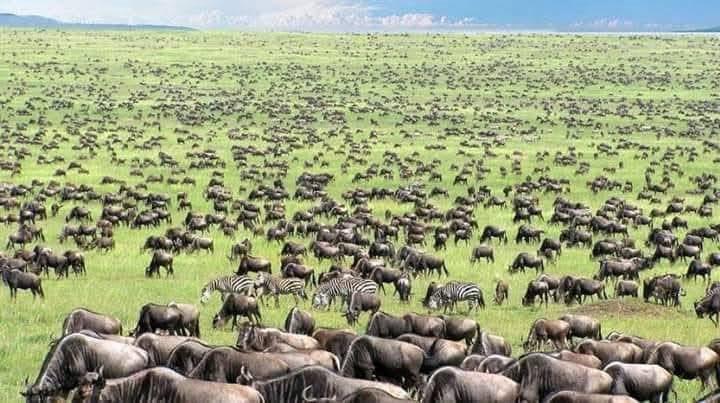
The migration in the Serengeti vs the Masai Mara
The migration herds are in the Serengeti for most of the year, from about November to June, and in the Masai Mara from about mid-July to October. In July and October the herds are moving between the two, and a large part of the herds stays in the northern Serengeti even during the Masai Mara season. This means you can plan a migration safari in the Serengeti in almost any month, while the Masai Mara season lasts about three to four months.
The Serengeti covers about 14,750 square kilometres, and most visitors only explore the southern plains and the central Serengeti, so large parts of the park see few vehicles. Guests who see the migration in these remote areas enjoy a wild, exclusive experience. The Masai Mara is much smaller, about 1,510 square kilometres, roughly a tenth of the size of the Serengeti. That makes it easy to explore in a short time, with a very high density of wildlife and short travel times from Nairobi, but the main reserve can be busy in the peak season. Staying in the Mara Triangle or one of the conservancies helps you enjoy it with fewer vehicles.
Conclusion
The Serengeti is the better choice if you want to see the migration at any time of year, or want space and remote wilderness. The Masai Mara is the better choice from July to October, for a shorter trip, and for excellent game viewing in a small area at good value.
River crossings in the Masai Mara vs the Serengeti
There are two main river crossings in the migration: the Mara River crossings and the Grumeti River crossings. The Mara River crossings are the more famous, but both are thrilling. Both rivers have large Nile crocodiles that hunt the herds as they cross, creating some of the most dramatic scenes of the whole cycle. The Grumeti River crossings take place in the western corridor of the Serengeti, usually from June to early July. The Mara River crossings take place from July to October, usually best in August and September, and can start a little earlier or later depending on the rain and grass. The Mara River flows south from Kenya into the northern Serengeti, separating the Mara Triangle from the main Masai Mara reserve, and the Lamai triangle from the rest of the Serengeti. The herds cross back and forth to reach the grazing on either side, and that is what creates the crossings.
On the Serengeti side, the herds cross around Kogatende and into the Lamai triangle, with many crossing points, including the well-known Makutano crossing. The northern Serengeti is remote, so you will often share a crossing with fewer vehicles, whether you watch from Kogatende or from the Lamai wedge. On the Kenyan side, the Masai Mara has many crossing points along the stretch between the main reserve and the Mara Triangle. Crossings here are easy to reach, many camps are within a short drive of them, and there is a wide choice of accommodation at every budget, but popular crossings can draw a lot of vehicles in August. The Mara Triangle is run separately by the Mara Conservancy, is open to anyone who pays its entry fee, and usually has fewer vehicles than the main reserve. It has camps and lodges such as Little Governors’ Camp and Mara Serena Safari Lodge, as well as several camps along the Oloololo escarpment.
Conclusion
Both offer excellent river crossings from July to October. The Masai Mara is the more accessible and affordable choice, with a wide range of camps close to the river. The northern Serengeti suits travellers who want a quieter, more remote experience and are happy with upper mid-range and luxury camps.
Hunting on the plains in the Serengeti vs the Masai Mara
Watching predators hunt is another highlight of a migration safari. The Mara–Serengeti ecosystem has good numbers of all three of Africa’s big cats. Estimates suggest there are around 3,000 lions, roughly 1,000 leopards and a few hundred cheetahs across the ecosystem. Lions are the ones you are most likely to see hunting, as cheetahs are fewer and leopards are solitary and shy. Lions here live in prides of roughly 10 to 25 animals, and they hunt together, which makes them very successful hunters. In the Serengeti, lions are common around Lake Ndutu in the south, Seronera in the central Serengeti, Sasakwa in the Grumeti reserve and the Lamai wedge in the north. In the Masai Mara, key lion areas include the Musiara marsh, the Mara Triangle, the Mara–Talek confluence and the conservancies to the north and east. Most of the ecosystem’s lions live in the much larger Serengeti, but the Masai Mara has a higher lion density, which makes lion hunts a little easier to find there.
In the Masai Mara, leopards are seen especially along the Mara and Talek rivers. In the Serengeti, leopards are often found in the woodland of the Seronera valley and around Ndutu. For cheetahs, the eastern Serengeti around the Gol kopjes is a hotspot and one of the best places to see them, though no sighting is ever guaranteed. The Masai Mara also has a good cheetah population, and cheetahs are often seen on its open plains.
Conclusion
The Masai Mara gives you a slightly better chance of seeing lion hunts because of its higher lion density. The Serengeti is excellent for cheetahs and leopards, especially around the Gol kopjes, Seronera and Ndutu.
Things to do on a Masai Mara vs Serengeti migration safari
Both the Masai Mara and the Serengeti offer activities that add to your migration safari:
Top migration experiences
- Horseback safaris. In the Masai Mara, horseback safaris are offered in the conservancies, such as Mara North, Mara Naboisho, Olare Motorogi and Ol Kinyei. Rides can be camp-based, where you stay in one camp throughout, or mobile, where you ride between fly camps across the Greater Mara. In the Serengeti, horseback safaris take place in the Grumeti reserve, mostly as a camp-based experience from the Sasakwa equestrian centre.
- Hot air balloon safaris. In the Masai Mara, balloon flights take off inside the reserve, mostly along the Mara River. They give excellent views of the herds and the river, with its riverine forest winding across the endless plains. In the Serengeti, there are balloon operators in the north, west, central and southern (Ndutu) areas. The central Seronera area is especially scenic, with views of the wildebeest columns moving north from the Moru kopjes and over the wooded, wildlife-rich Seronera valley.
- Walking safaris and fly camping. Several camps in both the Masai Mara and the Serengeti offer walking safaris in their private areas, letting you experience the migration on foot and at close range. The Mara conservancies and the Grumeti reserve in the western Serengeti offer the best walking experiences, from a short walk to a multi-day fly camping trip.
Conclusion
Both the Masai Mara and the Serengeti offer similar migration activities. The Masai Mara conservancies have the widest choice of walking and horseback safaris, and the Mara is a great place for a balloon flight over the river. The Serengeti offers balloon flights in more areas, including over the calving plains and the central Serengeti.
So, where should you go?
There is no wrong answer. Choose the Masai Mara if you are travelling from July to October, have a shorter time, want excellent value and a wide choice of camps, or want to combine your safari with other parts of Kenya. Choose the Serengeti if you are travelling at another time of year, want to see the calving season or the Grumeti crossings, or want a quieter, more remote experience. And if you have the time, a combined Masai Mara and Serengeti safari gives you the best of both. Tell us when you would like to travel and we will help you choose.
Ready to see the migration? Join our 5 Day Wildebeest Migration Safari in the Masai Mara for the river crossings from July to October, or combine Kenya and Tanzania on our 6 Day Masai Mara, Serengeti and Ngorongoro Safari. Love riding? Read about migration horse riding in the Serengeti. Contact us and we will plan the right migration safari for your dates and budget.